
Exploring the Use of VLMs for Navigation Assistance for People with Blindness and Low Vision
arXiv cs.AI / 3/18/2026
💬 OpinionIdeas & Deep AnalysisTools & Practical UsageModels & Research
Key Points
- The paper investigates the potential of vision-language models (VLMs) to assist people with blindness and low vision (pBLV) in navigation, evaluating both closed-source and open-source models such as GPT-4V, GPT-4o, Gemini-1.5-Pro, Claude-3.5-Sonnet, Llava-v1.6-mistral, and Llava-onevision-qwen.
- GPT-4o consistently outperforms other models across tasks, especially in spatial reasoning and scene understanding, while open-source models show limitations in nuanced reasoning and adaptability in complex environments.
- Common challenges identified include difficulties counting objects in clutter, biases in spatial reasoning, and a tendency to emphasize object details over spatial feedback, reducing navigation usability for pBLV.
- The study finds that VLMs still have promising potential for wayfinding when better aligned with human feedback and improved spatial reasoning, suggesting actionable insights for integrating VLMs into assistive technologies.
- The results provide guidance on strengths and limitations of current VLMs and outline directions for enhancing usability in real-world pBLV navigation applications.
Related Articles
Day 10: 230 Sessions of Hustle and It Comes Down to One Person Reading a Document
Dev.to
5 Dangerous Lies Behind Viral AI Coding Demos That Break in Production
Dev.to
Two bots, one confused server: what Nimbus revealed about AI agent identity
Dev.to
How to Create a Month of Content in One Day Using AI (Step-by-Step System)
Dev.to
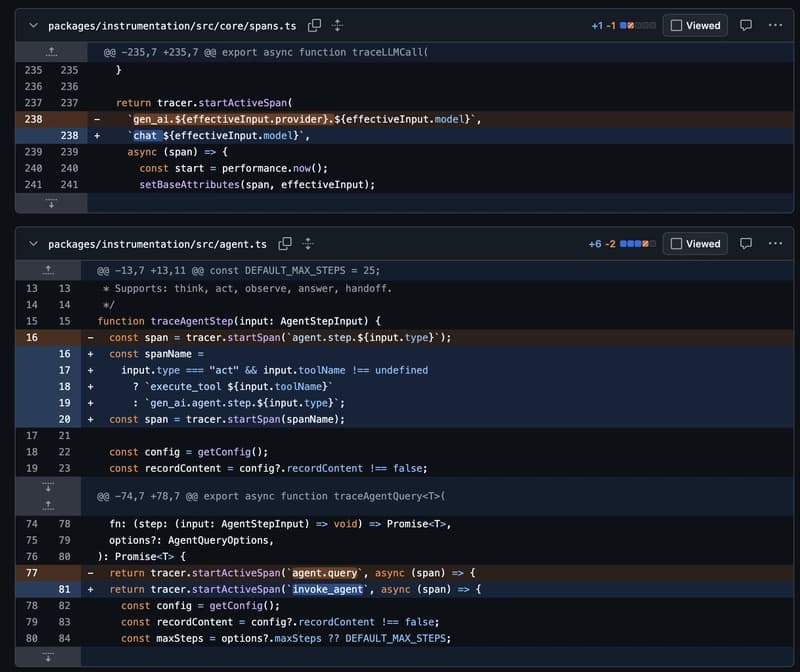
OpenTelemetry just standardized LLM tracing. Here's what it actually looks like in code.
Dev.to


