
Adaptive Nonparametric Perturbations of Parametric Models with Generalized Bayes
arXiv stat.ML / 4/3/2026
💬 OpinionIdeas & Deep AnalysisModels & Research
Key Points
- The paper proposes semiparametric corrections to parametric Bayesian models to make inference more reliable when the parametric specification may be wrong, focusing on functionals of the true data distribution.
- It starts from a fully Bayesian framework that explicitly models misspecification and shows via asymptotic analysis that the approach can be both robust and data efficient, with fast convergence when the parametric model is close to reality.
- The authors argue that fully Bayesian inference becomes impractical because it requires computing Bayes factors for a nonparametric model, which is computationally challenging.
- They introduce a generalized Bayes-based correction method that avoids nonparametric Bayes factor computation while aiming to preserve the robustness and efficiency properties of the fully Bayesian approach.
- The method is demonstrated by estimating causal effects of gene expression from single-cell RNA-seq data.
Related Articles

90000 Tech Workers Got Fired This Year and Everyone Is Blaming AI but Thats Not the Whole Story
Dev.to

Microsoft’s $10 Billion Japan Bet Shows the Next AI Battleground Is National Infrastructure
Dev.to
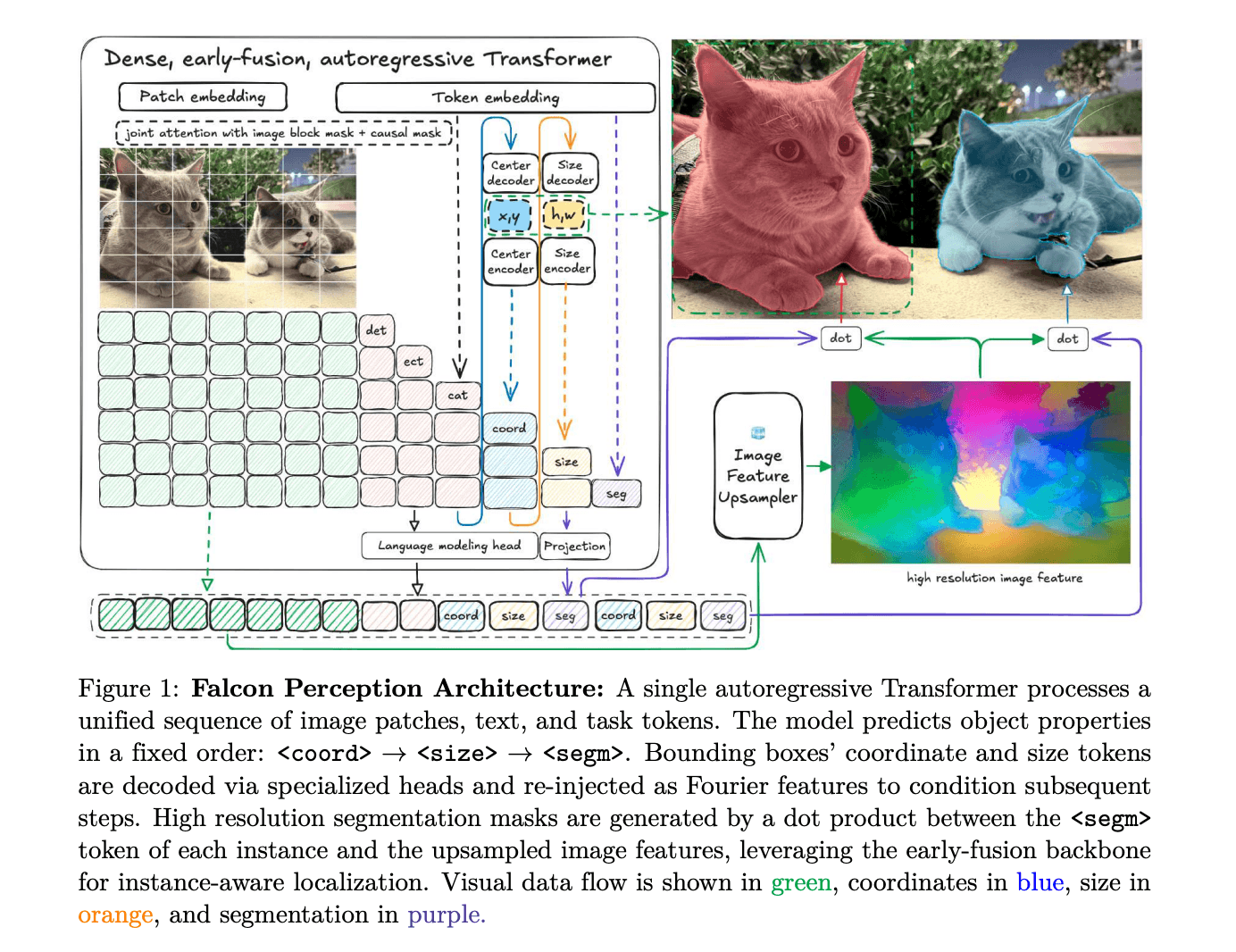
TII Releases Falcon Perception: A 0.6B-Parameter Early-Fusion Transformer for Open-Vocabulary Grounding and Segmentation from Natural Language Prompts
MarkTechPost

The house asked me a question
Dev.to

Precision Clip Selection: How AI Suggests Your In and Out Points
Dev.to


