
Efficient Reinforcement Learning using Linear Koopman Dynamics for Nonlinear Robotic Systems
arXiv cs.RO / 4/23/2026
📰 NewsDeveloper Stack & InfrastructureModels & Research
Key Points
- The paper introduces a model-based reinforcement learning framework for nonlinear robotic systems that uses Koopman operator theory to learn linear “lifted” dynamics for closed-loop control.
- It builds an actor-critic policy optimization scheme where the policy directly parameterizes a closed-loop controller based on the learned linear model.
- To cut computational cost and reduce error from long-horizon rollouts, it estimates policy gradients using one-step predictions instead of multi-step propagation.
- The method supports online mini-batch policy gradient updates from streamed interaction data, enabling continual improvement during training.
- Experiments on nonlinear control benchmarks and real robots (Kinova Gen3 arm and Unitree Go1 quadruped) show better sample efficiency than model-free RL, stronger performance than model-based baselines, and results comparable to classical controllers when exact dynamics are available.
Related Articles

Trajectory Forecasts in Unknown Environments Conditioned on Grid-Based Plans
Dev.to
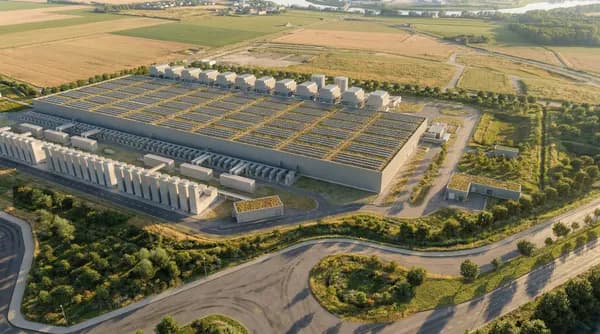
Elevating Austria: Google invests in its first data center in the Alps.
Google Blog
OpenAI Just Named It Workspace Agents. We Open-Sourced Our Lark Version Six Months Ago
Dev.to

GPT Image 2 Subject-Lock Editing: A Practical Guide to input_fidelity
Dev.to
AI Tutor That Works Offline — Study Anywhere with EaseLearn AI
Dev.to


