
AutoSearch: Adaptive Search Depth for Efficient Agentic RAG via Reinforcement Learning
arXiv cs.AI / 4/21/2026
📰 NewsIdeas & Deep AnalysisTools & Practical UsageModels & Research
Key Points
- Agentic RAG systems can waste computation and increase latency due to redundant multi-step retrieval searches, so prior approaches often cap search depth to reduce cost.
- The paper analyzes the relationship between search depth, question complexity, and the agent’s capability, and identifies a “minimal sufficient” depth that balances accuracy and efficiency.
- AutoSearch is introduced as a reinforcement learning framework that judges each retrieval step by generating self-produced intermediate answers.
- By rewarding the achievement of the minimal sufficient depth and penalizing over-searching (with additional stabilizing reward design), AutoSearch reduces unnecessary steps while maintaining answer quality.
- Experiments across multiple benchmarks show AutoSearch improves the accuracy–efficiency trade-off by alleviating over-searching.
Related Articles

Black Hat USA
AI Business

¿Hasta qué punto podría la IA reemplazarnos en nuestros trabajos? A veces creo que la gente exagera un poco.
Reddit r/artificial
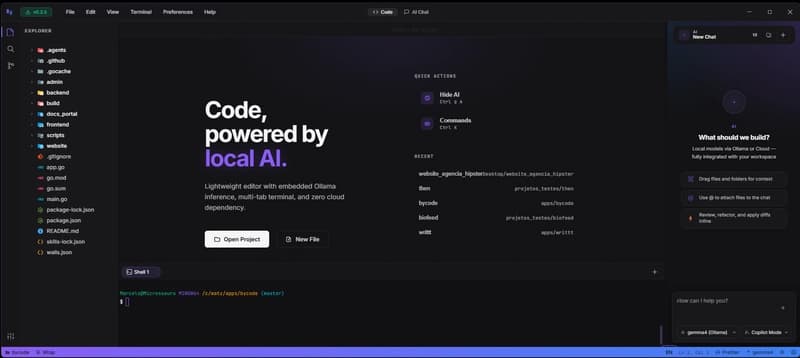
Why I Built byCode: A 100% Local, Privacy-First AI IDE
Dev.to

Magnificent irony as Meta staff unhappy about running surveillance software on work PCs
The Register
v0.21.1
Ollama Releases


