
Free Decompression with Algebraic Spectral Curves
arXiv stat.ML / 5/6/2026
📰 NewsIdeas & Deep AnalysisModels & Research
Key Points
- The paper addresses a practical limitation in deep learning theory methods that rely on random matrix theory: computing spectral information is often restricted to small matrix sizes, motivating extrapolation to larger, more realistic models.
- It introduces a more general Free Decompression (FD) approach by using algebraic spectral curve theory, assuming that the Stieltjes transform of the spectral density satisfies an algebraic relation.
- The framework reformulates FD as an evolution along spectral curves that can be integrated, making the method applicable beyond earlier strong assumptions.
- It supports challenging, realistic spectral shapes including multi-modal bulks, multi-scale spectra, and spectral atoms, which are typical in real data and common ML model components.
- The authors validate the method on spectral matrices relevant to modern ML, including Hessian/activation-related matrices for neural networks and components from large-scale diffusion models.
Related Articles

Top 10 Free AI Tools for Students in 2026: The Ultimate Study Guide
Dev.to

AI as Your Contingency Co-Pilot: Automating Wedding Day 'What-Ifs'
Dev.to
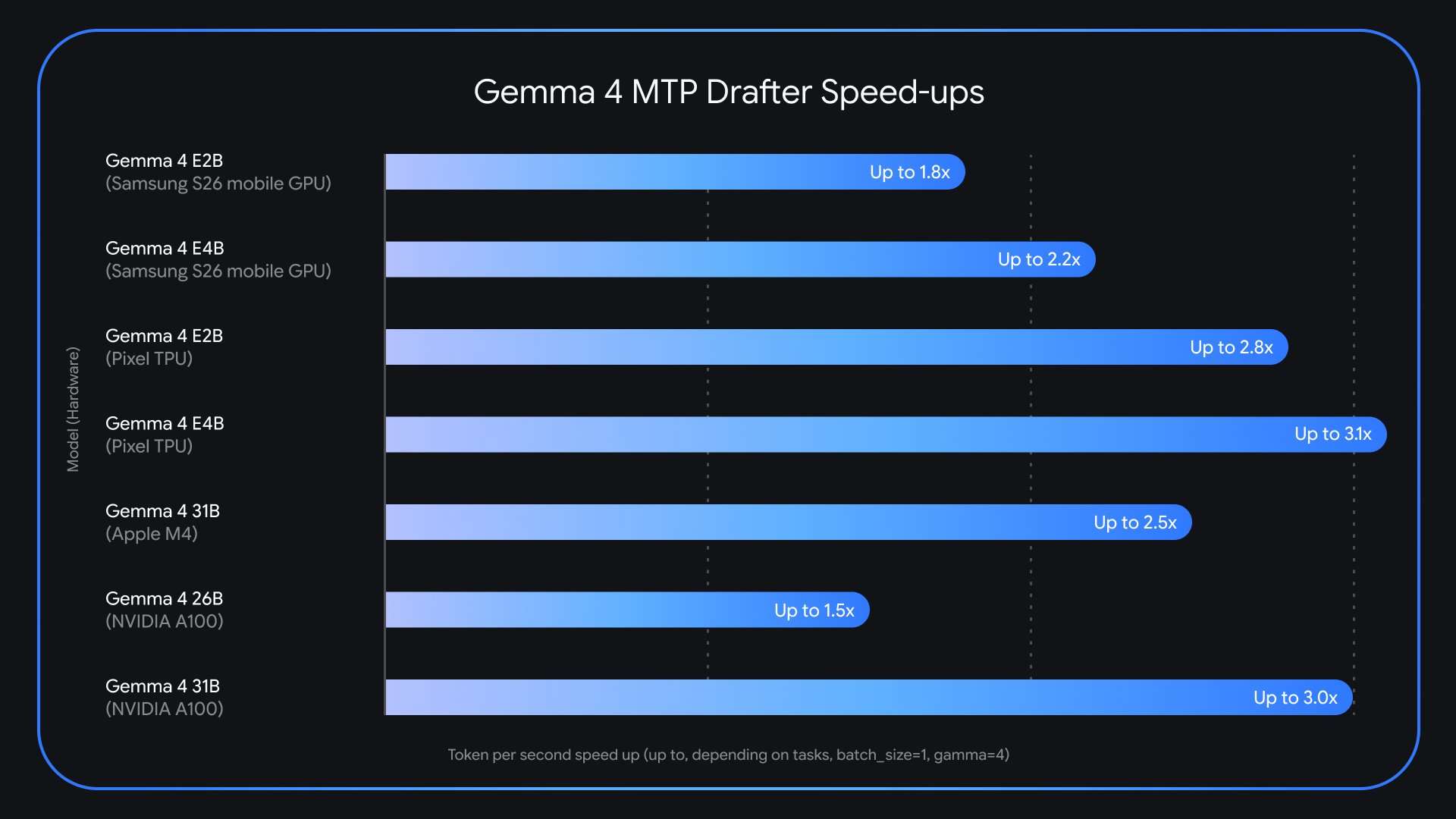
Google AI Releases Multi-Token Prediction (MTP) Drafters for Gemma 4: Delivering Up to 3x Faster Inference Without Quality Loss
MarkTechPost
When Claude Hallucinates in Court: The Latham & Watkins Incident and What It Means for Attorney Liability
MarkTechPost
Solidity LM surpasses Opus
Reddit r/LocalLLaMA


