
On Model-Based Clustering With Entropic Optimal Transport
arXiv stat.ML / 5/6/2026
💬 OpinionIdeas & Deep AnalysisModels & Research
Key Points
- The paper proposes a new model-based clustering framework where optimizing log-likelihood is replaced by an entropic optimal transport (EOT)–based loss function.
- It argues that the EOT loss shares the same global optimum as the original log-likelihood objective, but has a better-conditioned (more well-behaved) optimization landscape.
- Because the log-likelihood objective is nonconvex and prone to many spurious local optima, the new approach aims to reduce the need for multiple random initializations.
- The authors introduce and analyze a Sinkhorn-EM algorithm to optimize the EOT loss, showing convergence rates comparable to standard EM.
- Extensive experiments and two real-world clustering applications (C. elegans microscopy image segmentation and spatial transcriptomics) show the EOT-based method outperforms log-likelihood optimization in practice.
Related Articles

Top 10 Free AI Tools for Students in 2026: The Ultimate Study Guide
Dev.to

AI as Your Contingency Co-Pilot: Automating Wedding Day 'What-Ifs'
Dev.to
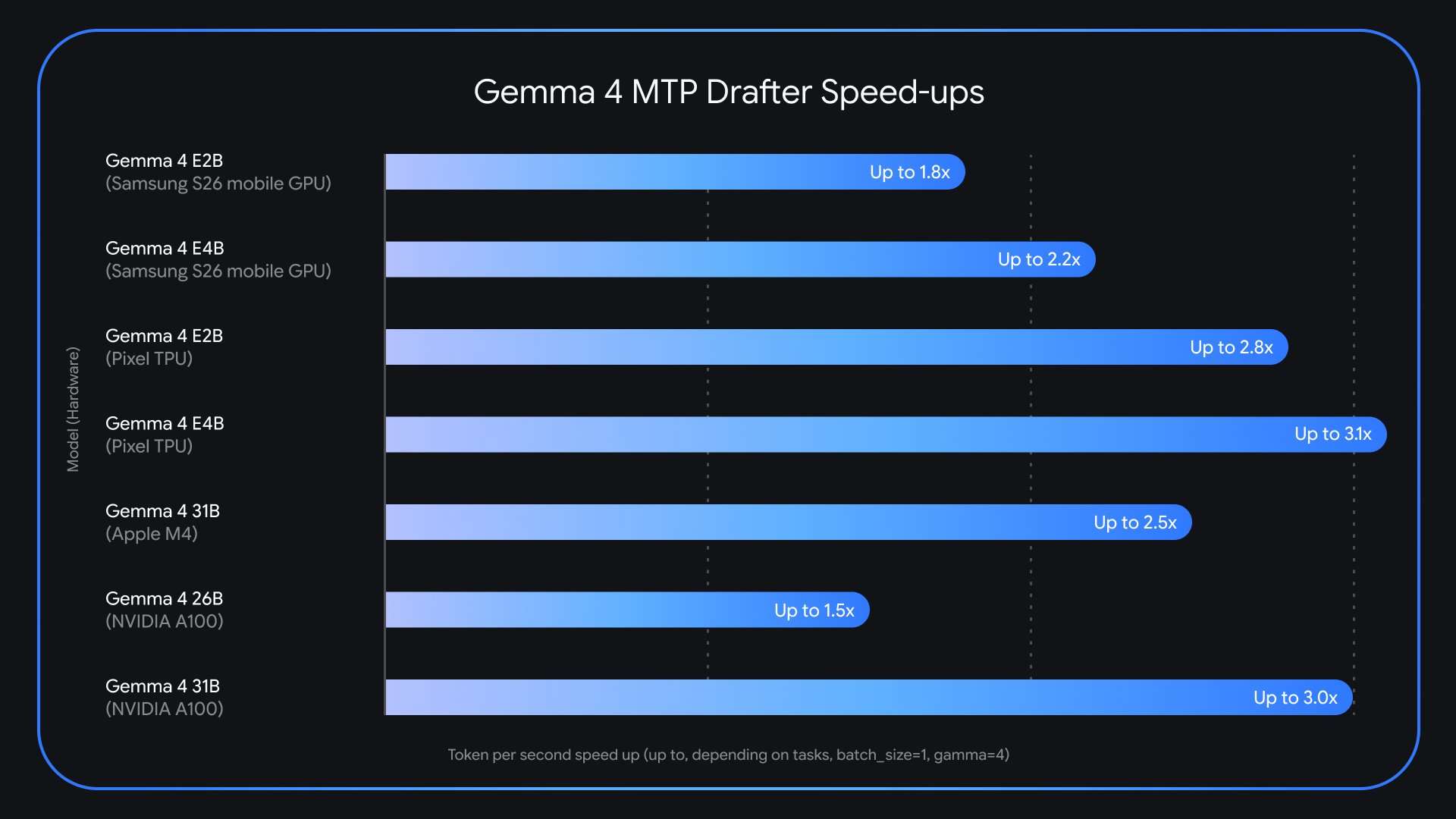
Google AI Releases Multi-Token Prediction (MTP) Drafters for Gemma 4: Delivering Up to 3x Faster Inference Without Quality Loss
MarkTechPost
When Claude Hallucinates in Court: The Latham & Watkins Incident and What It Means for Attorney Liability
MarkTechPost
Solidity LM surpasses Opus
Reddit r/LocalLLaMA


