
Demystifying Group Relative Policy Optimization: Its Policy Gradient is a U-Statistic
arXiv stat.ML / 3/24/2026
💬 OpinionIdeas & Deep AnalysisModels & Research
Key Points
- The paper develops a unified theoretical framework showing that Group Relative Policy Optimization (GRPO) policy gradients can be expressed as a U-statistic, clarifying why GRPO works in practice.
- It derives statistical properties for GRPO, including a mean-squared-error characterization, finite-sample error bounds, and the asymptotic distribution of the suboptimality gap for the learned policy.
- The authors prove GRPO is asymptotically equivalent to an “oracle” policy-gradient method that has access to a value function measuring policy quality at each training iteration, implying near-optimal long-run performance.
- A universal scaling law is established to guide selection of the optimal group size, and experiments validate both the universality of the optimal group size and the oracle-like behavior.
- Overall, the work links GRPO’s widely used empirical performance (notably in DeepSeekMath/DeepSeek-R1) to classical statistics, enabling more principled tuning and theoretical guarantees.
Related Articles
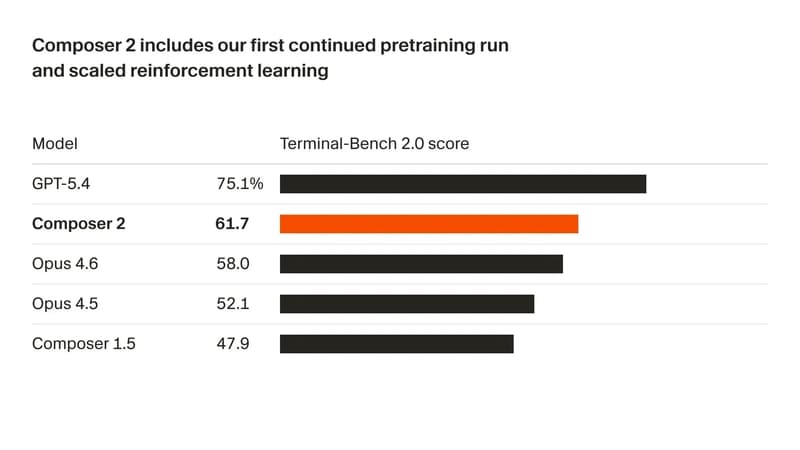
Composer 2: What is new and Compares with Claude Opus 4.6 & GPT-5.4
Dev.to
How UCP Breaks Your E-Commerce Tracking Stack: A Platform-by-Platform Analysis
Dev.to
AI Text Analyzer vs Asking Friends: Which Gives Better Perspective?
Dev.to
[D] Cathie wood claims ai productivity wave is starting, data shows 43% of ceos save 8+ hours weekly
Reddit r/MachineLearning

Microsoft hires top AI researchers from Allen Institute for AI for Suleyman's Superintelligence team
THE DECODER


