
Auction-Based Online Policy Adaptation for Evolving Objectives
arXiv cs.LG / 4/3/2026
💬 OpinionIdeas & Deep AnalysisModels & Research
Key Points
- The paper studies multi-objective reinforcement learning where objectives from the same family can appear or disappear during runtime, requiring policies that adapt efficiently to changing active goals.
- It introduces a modular framework in which each objective has its own selfish local policy and a novel auction-based coordination mechanism that selects actions via bids proportional to the urgency of the current state.
- The approach supports dynamic adaptation by adding or removing the corresponding local policies when objectives change, and it enables rapid runtime switching by deploying parameterized policy copies for objectives from the same family.
- The selfish local policies are computed by reformulating the problem as a general-sum game, where each policy must learn not only to satisfy its objective but also to reason about other objectives and submit calibrated bids.
- Experiments on Atari Assault and a gridworld path-planning task with dynamic targets show substantially better performance than monolithic PPO-trained policies.
Related Articles

90000 Tech Workers Got Fired This Year and Everyone Is Blaming AI but Thats Not the Whole Story
Dev.to

Microsoft’s $10 Billion Japan Bet Shows the Next AI Battleground Is National Infrastructure
Dev.to
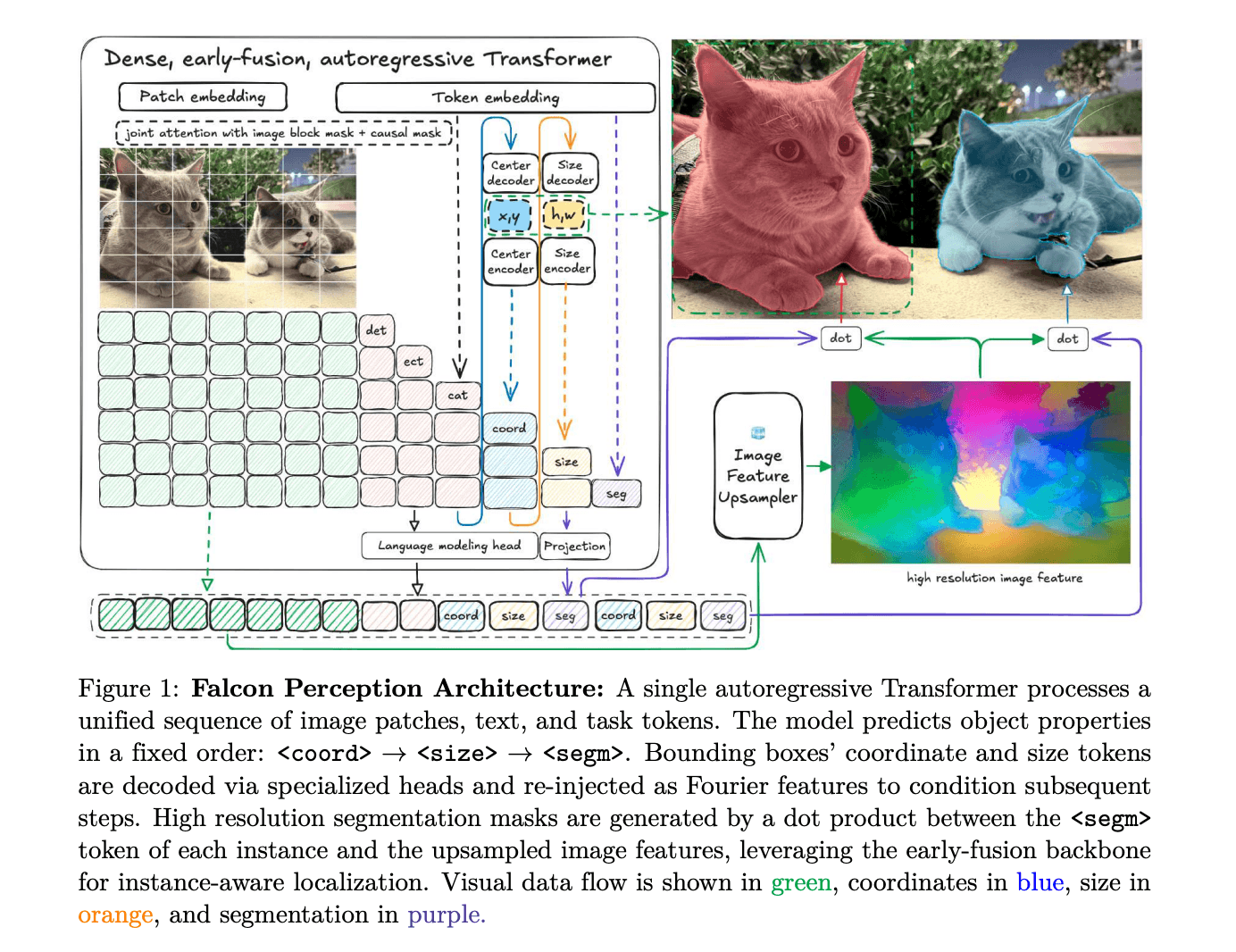
TII Releases Falcon Perception: A 0.6B-Parameter Early-Fusion Transformer for Open-Vocabulary Grounding and Segmentation from Natural Language Prompts
MarkTechPost

The house asked me a question
Dev.to

Precision Clip Selection: How AI Suggests Your In and Out Points
Dev.to


