
Frequency-aware Decomposition Learning for Sensorless Wrench Forecasting on a Vibration-rich Hydraulic Manipulator
arXiv cs.RO / 4/15/2026
📰 NewsSignals & Early TrendsIdeas & Deep AnalysisModels & Research
Key Points
- The paper proposes a Frequency-aware Decomposition Network (FDN) to forecast force/torque (wrench) sensorlessly from proprioceptive history, targeting interactions dominated by high-frequency vibrations such as grinding.
- FDN decomposes wrench predictions spectrally using asymmetric deterministic and probabilistic output heads, treating the high-frequency residual as a learned conditional distribution.
- A frequency-awareness mechanism adaptively filters input spectra and applies a frequency-band prior to outputs, improving estimation specifically in the high-frequency band.
- The authors pretrain FDN on a large open-source robot dataset and show transfer learning benefits when applying the learned representation to a 6-DoF hydraulic manipulator’s real-world grinding excavation data under delayed estimation.
- Results indicate FDN outperforms baseline estimators/forecasters in high-frequency wrench prediction while remaining competitive in low-frequency estimation, with code/data planned for release after acceptance.
Related Articles

Black Hat Asia
AI Business

The Complete Guide to Better Meeting Productivity with AI Note-Taking
Dev.to

5 Ways Real-Time AI Can Boost Your Sales Call Performance
Dev.to
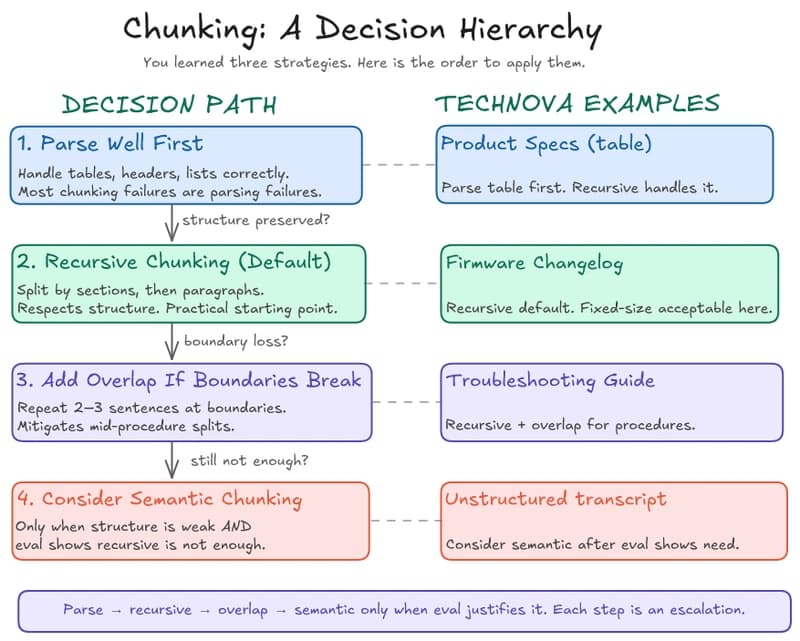
RAG in Practice — Part 4: Chunking, Retrieval, and the Decisions That Break RAG
Dev.to
Why dynamically routing multi-timescale advantages in PPO causes policy collapse (and a simple decoupled fix) [R]
Reddit r/MachineLearning


