
Tempered Guided Diffusion
arXiv stat.ML / 5/6/2026
📰 NewsIdeas & Deep AnalysisModels & Research
Key Points
- Tempered Guided Diffusion (TGD) is a training-free conditional diffusion sampler that reduces wasted computation caused by widely varying guided trajectories and insufficient recovery from early missteps.
- TGD formulates sampling as an annealed sequential Monte Carlo (SMC) process that uses noisy diffusion states only as auxiliary variables, reweighting particles via incremental likelihood ratios and resampling across noise levels.
- The method targets tempered posteriors over the clean signal, concentrating compute on trajectories that are simultaneously plausible under the diffusion prior and the given observation.
- Under idealized exact-reconstruction assumptions, TGD provides a consistent particle approximation to the posterior as the number of particles increases.
- For expensive reconstruction settings, Accelerated TGD (A-TGD) prunes particles partway through sampling to keep only a single high-likelihood trajectory, improving wall-clock speed–quality tradeoffs in experiments.
Related Articles

Top 10 Free AI Tools for Students in 2026: The Ultimate Study Guide
Dev.to

AI as Your Contingency Co-Pilot: Automating Wedding Day 'What-Ifs'
Dev.to
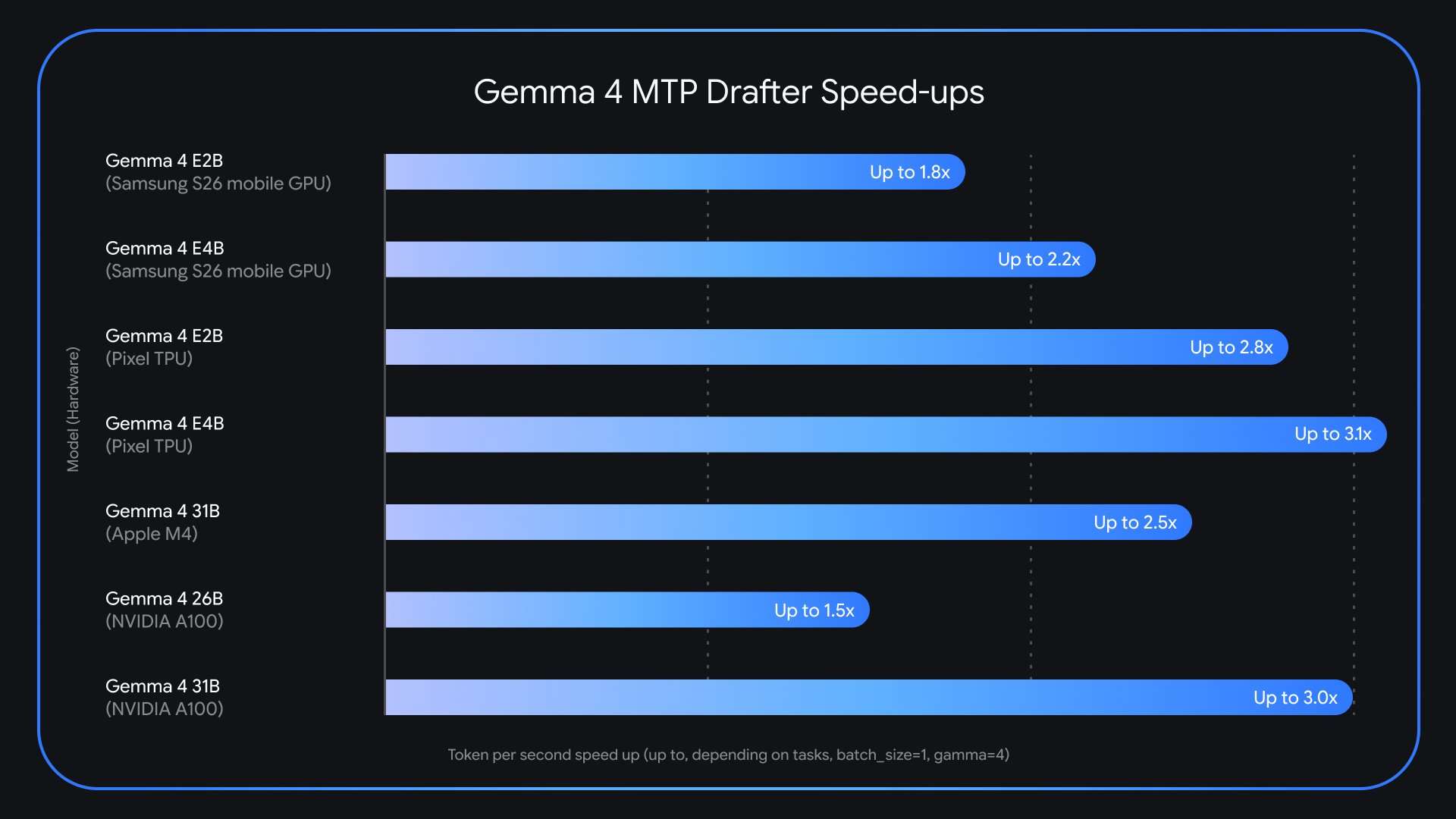
Google AI Releases Multi-Token Prediction (MTP) Drafters for Gemma 4: Delivering Up to 3x Faster Inference Without Quality Loss
MarkTechPost
When Claude Hallucinates in Court: The Latham & Watkins Incident and What It Means for Attorney Liability
MarkTechPost
Solidity LM surpasses Opus
Reddit r/LocalLLaMA


