
Multi-Camera View Scaling for Data-Efficient Robot Imitation Learning
arXiv cs.RO / 4/2/2026
💬 OpinionSignals & Early TrendsIdeas & Deep AnalysisModels & Research
Key Points
- The paper addresses a key bottleneck in robotic imitation learning: policies generalize poorly when expert demonstrations lack diversity, yet collecting diverse trajectories across environments is expensive and difficult.
- It proposes a data-efficient framework that increases training diversity by scaling multi-camera viewpoints for each expert trajectory, effectively creating pseudo-demonstrations without requiring additional human effort.
- The authors study how different action-space choices interact with view scaling, finding that camera-space representations and richer multi-view diversity can further improve invariance in visual features.
- A multiview action aggregation method is introduced so that policies trained with multiple cameras can still be deployed effectively with single-view inputs.
- Experiments in both simulation and real-world manipulation tasks show significant improvements in data efficiency and generalization over single-view imitation learning baselines, with minimal added hardware complexity.
Related Articles

Black Hat Asia
AI Business
v5.5.0
Transformers(HuggingFace)Releases
Bonsai (PrismML's 1 bit version of Qwen3 8B 4B 1.7B) was not an aprils fools joke
Reddit r/LocalLLaMA

Big Tech firms are accelerating AI investments and integration, while regulators and companies focus on safety and responsible adoption.
Dev.to
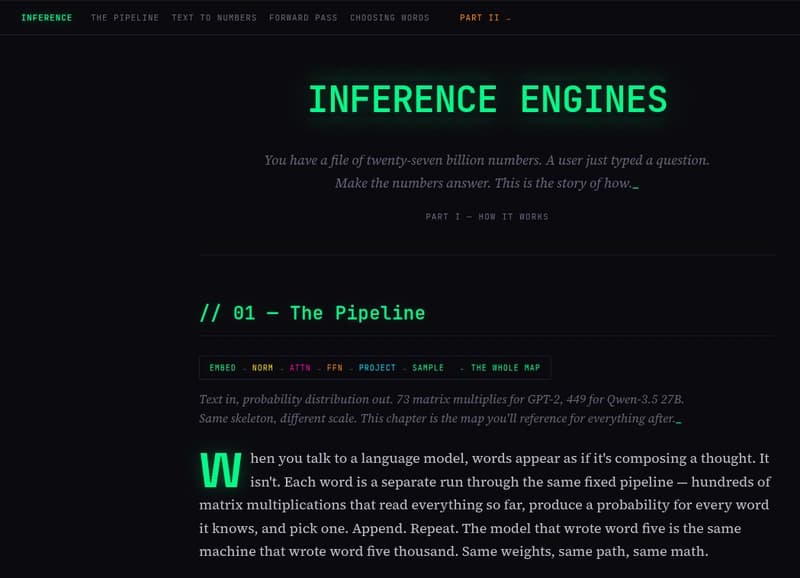
Inference Engines - A visual deep dive into the layers of an LLM
Dev.to


