
FreeTimeGS++: Secrets of Dynamic Gaussian Splatting and Their Principles
arXiv cs.CV / 5/6/2026
📰 NewsIdeas & Deep AnalysisModels & Research
Key Points
- The paper analyzes what actually drives performance gains in 4D Gaussian Splatting (4DGS), where prior work shows strong results but the underlying principles were not well understood.
- It creates a controlled baseline (FreeTimeGS_ours) by formalizing and reproducing the heuristics of the state-of-the-art FreeTimeGS, enabling systematic study.
- The authors identify key factors such as emergent temporal partitioning caused by Gaussian durations, and a gap between photometric accuracy and spatiotemporal consistency.
- They introduce FreeTimeGS++, which uses gated marginalization and neural velocity fields to improve stability and produce more robust dynamic scene representations with lower run-to-run variance.
- The implementation is planned to be released to support reproducible future research in 4DGS.
Related Articles

Top 10 Free AI Tools for Students in 2026: The Ultimate Study Guide
Dev.to

AI as Your Contingency Co-Pilot: Automating Wedding Day 'What-Ifs'
Dev.to
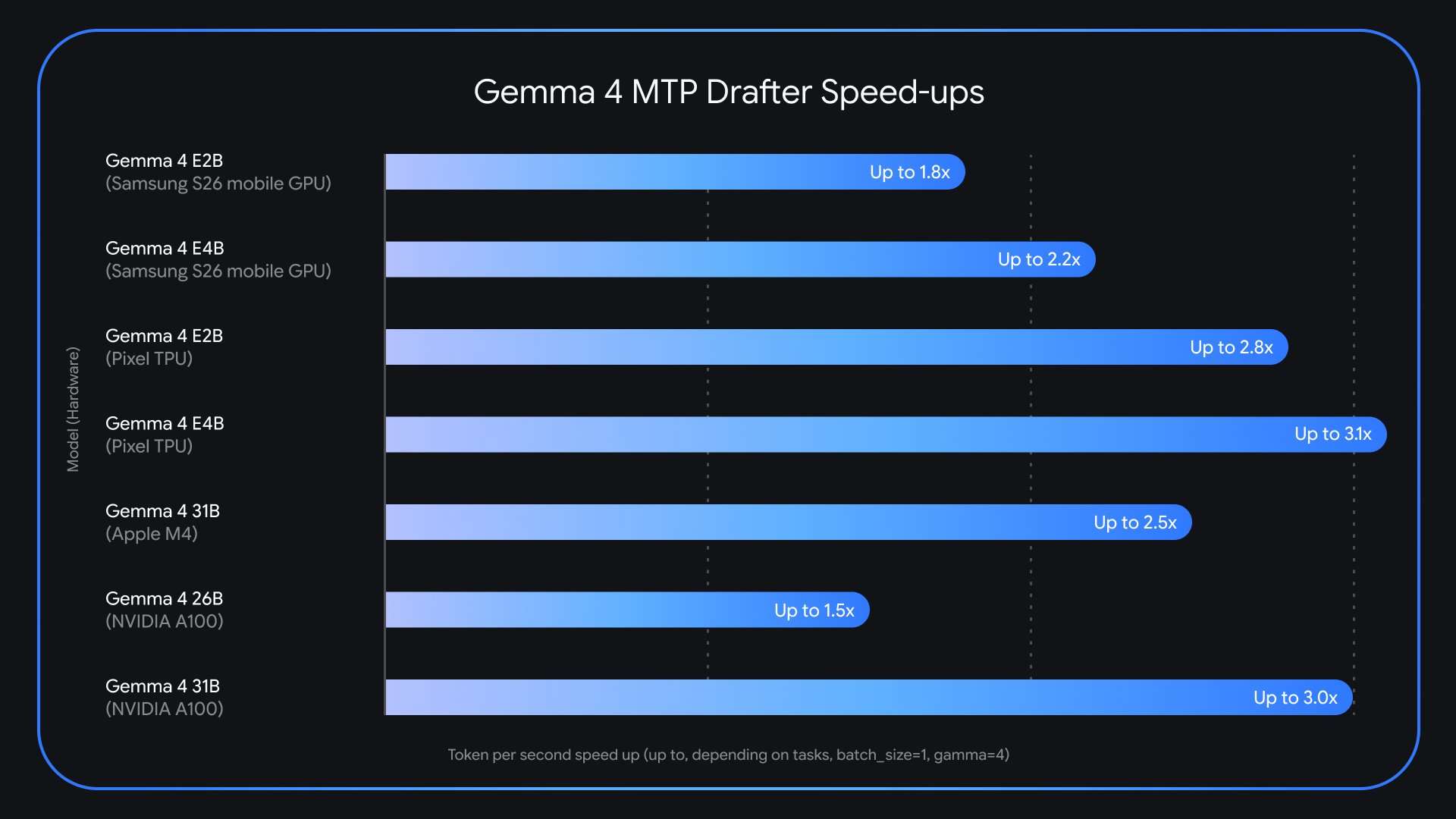
Google AI Releases Multi-Token Prediction (MTP) Drafters for Gemma 4: Delivering Up to 3x Faster Inference Without Quality Loss
MarkTechPost
When Claude Hallucinates in Court: The Latham & Watkins Incident and What It Means for Attorney Liability
MarkTechPost
Solidity LM surpasses Opus
Reddit r/LocalLLaMA


