
FedLLM: A Privacy-Preserving Federated Large Language Model for Explainable Traffic Flow Prediction
arXiv cs.LG / 4/21/2026
📰 NewsIdeas & Deep AnalysisModels & Research
Key Points
- The paper introduces FedLLM, a privacy-preserving federated framework for explainable multi-horizon short-term traffic flow prediction (15–60 minutes) aimed at real-time ITS decision-making.
- It addresses limits of prior spatio-temporal and LLM-based methods by moving away from centralized training and incorporating structured, context-rich representations for better explainability.
- FedLLM contributes a Composite Selection Score (CSS) to choose freeways based on structural diversity, and a domain-adapted LLM fine-tuned on structured traffic prompts (spatial, temporal, and statistical context).
- The federated training setup enables collaboration across heterogeneous clients by exchanging only lightweight LoRA adapter parameters, reducing communication overhead and supporting learning under non-IID traffic.
- Experiments report improved predictive accuracy versus centralized baselines while generating structured, explainable outputs, suggesting federated learning can scale privacy-aware traffic forecasting with LLM reasoning.
Related Articles

Every time a new model comes out, the old one is obsolete of course
Reddit r/LocalLLaMA
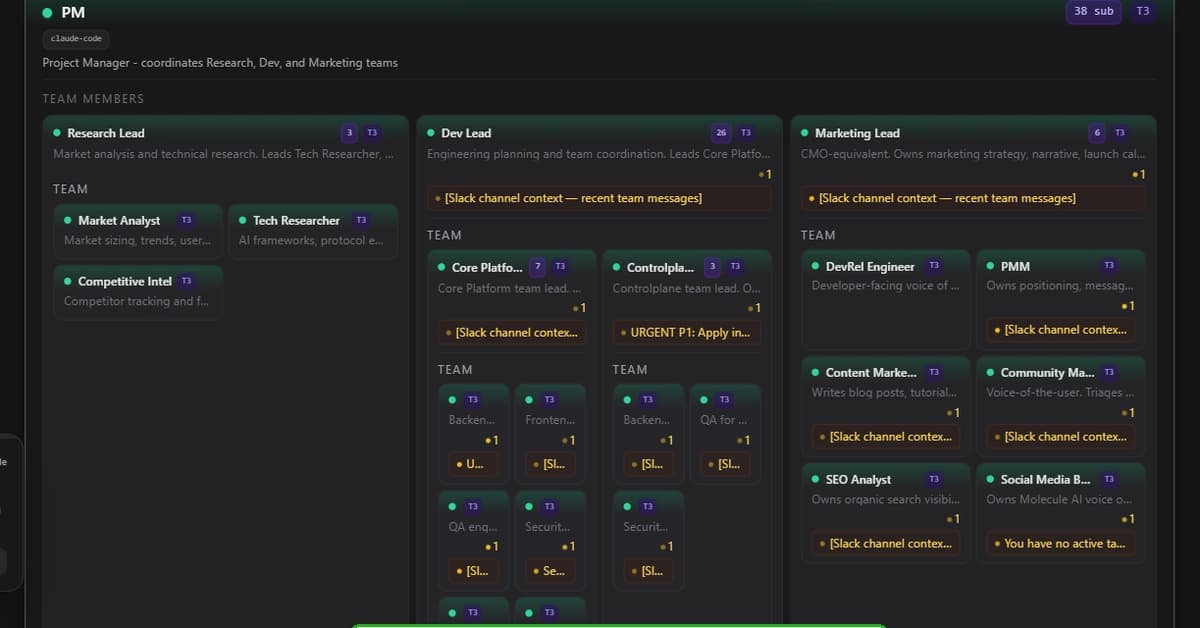
We built it during the NVIDIA DGX Spark Full-Stack AI Hackathon — and it ended up winning 1st place overall 🏆
Dev.to

Stop Losing Progress: Setting Up a Pro Jupyter Workflow in VS Code (No More Colab Timeouts!)
Dev.to
Building AgentOS: Why I’m Building the AWS Lambda for Insurance Claims
Dev.to

Where we are. In a year, everything has changed. Kimi - Minimax - Qwen - Gemma - GLM
Reddit r/LocalLLaMA


