
From Euler to Dormand-Prince: ODE Solvers for Flow Matching Generative Models
arXiv cs.LG / 5/5/2026
📰 NewsDeveloper Stack & InfrastructureModels & Research
Key Points
- The paper shows that Flow Matching generative models require solving an ODE where most compute comes from neural network forward passes, and derives four solvers (Euler, Explicit Midpoint, RK4, and Dormand–Prince 5(4)) directly from Taylor expansion.
- It provides from-scratch PyTorch implementations of these ODE solvers and benchmarks them on Conditional Flow Matching tasks from 2D toy distributions to MNIST, using sliced Wasserstein distance for quality.
- The results produce NFE-quality Pareto frontiers, indicating that RK4 with about 80 function evaluations can match the sample quality of Euler with about 200 evaluations.
- The authors report empirical findings: the learned velocity field becomes sharply stiffer near t=1 (consistent with adaptive solvers allocating more steps near the end), and solver quality differences grow for undertrained/smaller models, meaning solver choice matters more when the model is imperfect.
- All code and experiment scripts are released publicly, enabling direct reproduction and further experimentation.
Related Articles

Why Retail Chargeback Recovery Could Be AgentHansa's First Real PMF
Dev.to
Struggling with Qwen3.6 27B / 35B locally (3090) slow responses, breaking code looking for better setup + auto model switching
Reddit r/LocalLLaMA
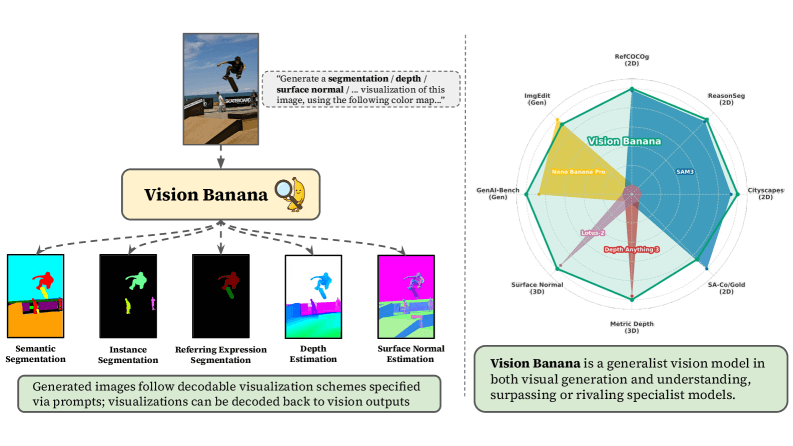
Last Week in AI #340 - OpenAI vs Musk + Microsoft, DeepSeek v4, Vision Banana
Last Week in AI

Trying to train tiny LLMs on length constrained reddit posts summarization task using GRPO on 3xMac Minis - updates!
Reddit r/LocalLLaMA

Uber Shares What Happens When 1.500 AI Agents Hit Production
Reddit r/artificial


