
Fine-Grained Analysis of Shared Syntactic Mechanisms in Language Models
arXiv cs.CL / 4/27/2026
📰 NewsIdeas & Deep AnalysisModels & Research
Key Points
- The paper examines whether transformer language models use shared neural mechanisms across different syntactic constructions, linking this to cross-constructional principles from linguistics.
- Using fine-grained causal interpretability (activation patching) on filler-gap dependencies and negative polarity item (NPI) licensing, the authors find a localized shared mechanism for filler-gap dependencies in early-to-middle layers, while NPI processing does not show a unified shared mechanism.
- The identified mechanisms generalize to out-of-distribution data, but a supervised distributed alignment search approach is reported to be vulnerable to overfitting on narrow linguistic distributions.
- As validation, the authors show that manipulating the attention heads/MLP blocks implicated by activation patching improves performance on acceptability judgment benchmarks.
- Overall, the study provides causal evidence about which internal components correspond to specific syntactic phenomena and how reliably those interpretations transfer beyond the training distribution.
Related Articles

Big Tech firms are accelerating AI investments and integration, while regulators and companies focus on safety and responsible adoption.
Dev.to
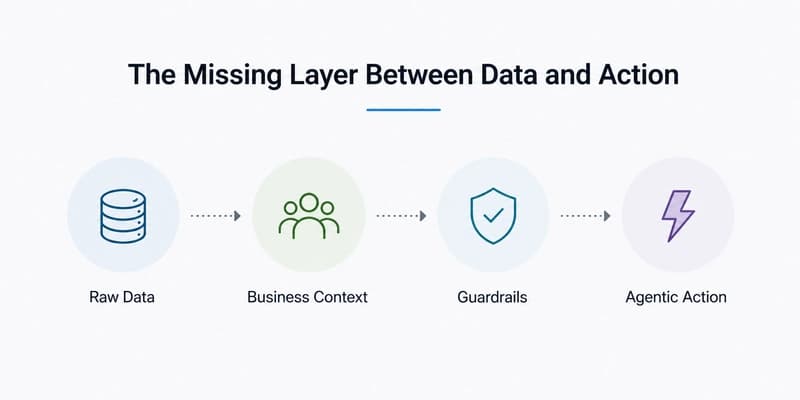
Everyone Wants AI Agents. Fewer Teams Are Ready for the Messy Business Context Behind Them
Dev.to
AI 编程工具对比 2026:Claude Code vs Cursor vs Gemini CLI vs Codex
Dev.to

How I Improved My YouTube Shorts and Podcast Audio Workflow with AI Tools
Dev.to

An improvement of the convergence proof of the ADAM-Optimizer
Dev.to


