
PRISM-CTG: A Foundation Model for Cardiotocography Analysis with Multi-View SSL
arXiv cs.LG / 5/6/2026
📰 NewsIdeas & Deep AnalysisModels & Research
Key Points
- The paper introduces PRISM-CTG, a clinically grounded self-supervised foundation model for cardiotocography (CTG) analysis that uses large volumes of unlabeled recordings to learn transferable representations.
- PRISM-CTG is pretrained with a multi-view SSL framework using three complementary pretext objectives—masked signal reconstruction (guided by random projections), prediction of clinical variables, and feature classification—each with a dedicated task token and cross-attention for information sharing.
- The approach reframes patient metadata and domain knowledge into additional supervisory targets, enabling more clinically meaningful representation learning than conventional training setups that underuse these signals.
- Experiments across seven CTG downstream tasks (antepartum and intrapartum) show PRISM-CTG consistently outperforms in-domain and SSL baselines, with strong external generalization on two datasets.
- The model achieves performance comparable to studies trained on substantially larger, privately labeled datasets, and the authors claim it is the first large-scale foundation model for CTG focused on domain-level representation learning.
Related Articles

Top 10 Free AI Tools for Students in 2026: The Ultimate Study Guide
Dev.to

AI as Your Contingency Co-Pilot: Automating Wedding Day 'What-Ifs'
Dev.to
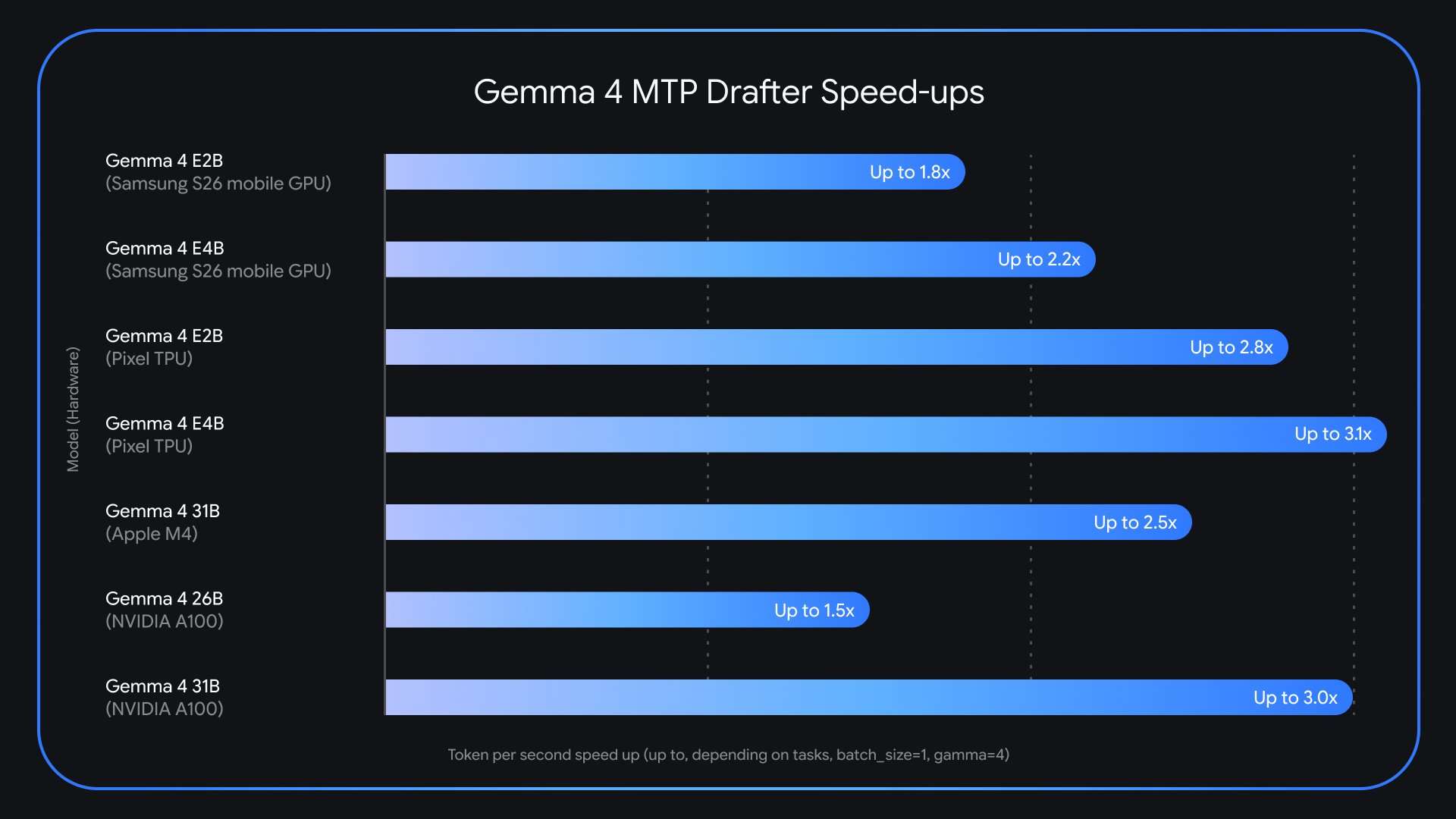
Google AI Releases Multi-Token Prediction (MTP) Drafters for Gemma 4: Delivering Up to 3x Faster Inference Without Quality Loss
MarkTechPost
When Claude Hallucinates in Court: The Latham & Watkins Incident and What It Means for Attorney Liability
MarkTechPost
Solidity LM surpasses Opus
Reddit r/LocalLLaMA


