
Large Language Models for Multilingual Code Intelligence: A Survey
arXiv cs.LG / 4/30/2026
💬 OpinionIdeas & Deep AnalysisModels & Research
Key Points
- The survey examines how large language models are being used for AI-assisted software engineering, noting performance gaps across programming languages.
- It highlights that existing research is often biased toward high-resource languages like Python, while languages such as Rust and OCaml still lag behind.
- The work focuses on two core multilingual code intelligence tasks: generating code in multiple languages from shared natural-language requirements and translating code across languages while preserving semantics.
- It reviews representative approaches, benchmarks, and evaluation metrics, and discusses key challenges and opportunities for reliable cross-language generalization.
- The survey frames multilingual, trustworthy code intelligence as essential because real-world software systems are typically “polyglot.”
Related Articles
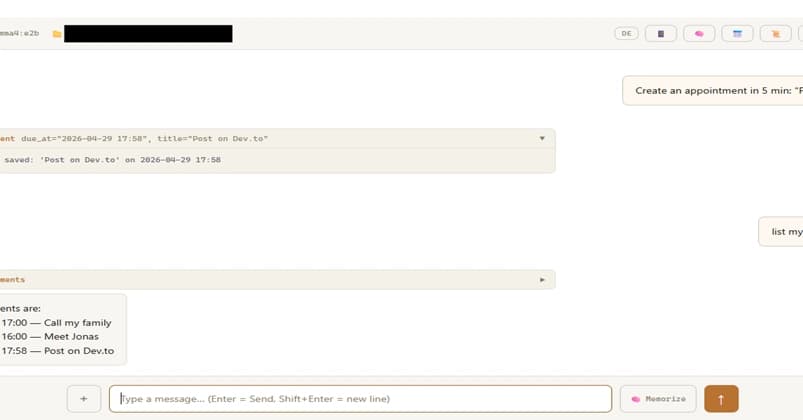
Building a Local AI Agent (Part 2): Six UX and UI Design Challenges
Dev.to

We Built a DNS-Based Discovery Protocol for AI Agents — Here's How It Works
Dev.to
Your first business opportunity in 3 commands: /register_directory in @biznode_bot, wait for matches, then /my_pulse to view...
Dev.to

Building AI Evaluation Pipelines: Automating LLM Testing from Dataset to CI/CD
Dev.to

Function Calling Harness 2: CoT Compliance from 9.91% to 100%
Dev.to


