
Novelty Adaptation Through Hybrid Large Language Model (LLM)-Symbolic Planning and LLM-guided Reinforcement Learning
arXiv cs.AI / 3/13/2026
📰 NewsIdeas & Deep AnalysisModels & Research
Key Points
- The paper addresses how autonomous agents struggle with novelties in open-world environments when planning domains lack necessary operators for novel objects.
- It proposes a neuro-symbolic architecture that integrates symbolic planning, reinforcement learning, and a large language model to handle novel objects.
- The LLM provides common sense reasoning to identify missing operators, helps generate plans with a symbolic planner, and writes reward functions to guide RL for newly identified operators.
- The method reportedly outperforms state-of-the-art approaches in operator discovery and operator learning in continuous robotic domains.
広告
Related Articles

Got My 39-Agent System Audited Live. Here's What the Maturity Scorecard Revealed.
Dev.to

The Redline Economy
Dev.to

$500 GPU outperforms Claude Sonnet on coding benchmarks
Dev.to

From Scattershot to Sniper: AI for Hyper-Personalized Media Lists
Dev.to
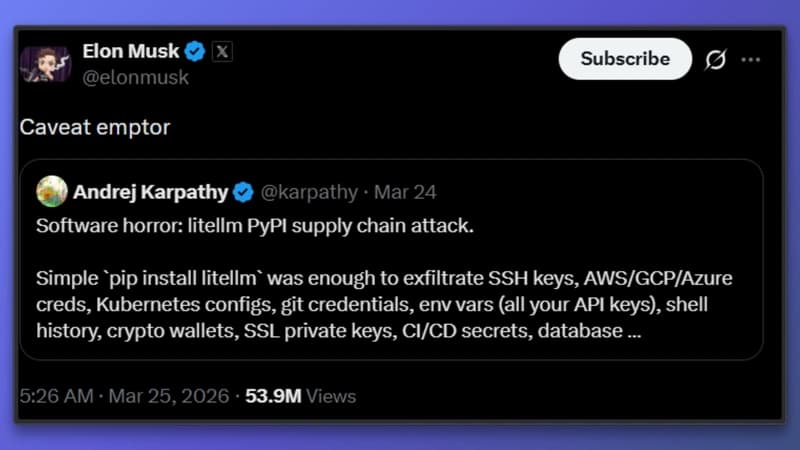
The LiteLLM Supply Chain Attack: A Wake-Up Call for AI Infrastructure
Dev.to


