
Incompleteness of AI Safety Verification via Kolmogorov Complexity
arXiv cs.AI / 4/7/2026
💬 OpinionIdeas & Deep AnalysisModels & Research
Key Points
- The paper argues that the difficulty of verifying AI safety and policy compliance is not only due to computational limits or model expressiveness, but also due to intrinsic information-theoretic barriers.
- It formalizes policy compliance as a verification problem over encoded system behaviors and analyzes the limits using Kolmogorov complexity.
- The authors prove an incompleteness theorem: for any fixed sound computably enumerable verifier, there is a complexity threshold beyond which true policy-compliant instances cannot be certified.
- This implies that no finite formal verifier can guarantee certification for all policy-compliant instances with arbitrarily high complexity, even ignoring resource constraints.
- The work motivates “proof-carrying” approaches that can provide instance-level correctness guarantees rather than relying solely on finite, fixed verifiers.
💡 Insights using this article
This article is featured in our daily AI news digest — key takeaways and action items at a glance.
Related Articles

Big Tech firms are accelerating AI investments and integration, while regulators and companies focus on safety and responsible adoption.
Dev.to

Could it be that this take is not too far fetched?
Reddit r/LocalLLaMA
npm audit Is Broken — Here's the Claude Code Skill I Built to Fix It
Dev.to

Meta Launches Muse Spark: A New AI Model for Everyday Use
Dev.to
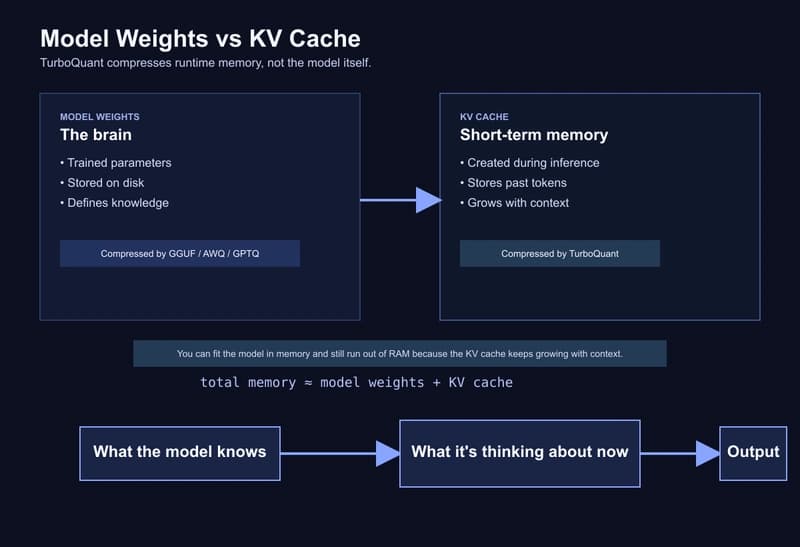
TurboQuant on a MacBook: building a one-command local stack with Ollama, MLX, and an automatic routing proxy
Dev.to


