
LLM-Driven Heuristic Synthesis for Industrial Process Control: Lessons from Hot Steel Rolling
arXiv cs.AI / 3/24/2026
📰 NewsIdeas & Deep AnalysisModels & Research
Key Points
- The paper presents an LLM-driven heuristic synthesis framework that generates human-readable, auditable Python controllers for hot steel rolling using iterative proposals refined via simulator feedback.
- It targets industrial process-control constraints—especially interpretability and auditability—by searching over explicit control logic for key objectives like height reduction, interpass time, and rolling velocity.
- The authors contribute an automated audit pipeline that formally verifies important safety and monotonicity properties for the best synthesized heuristic controller.
- They introduce a budget allocation strategy for LLM-based heuristic search, showing that Luby-style universal restarts transfer to this setting and avoid problem-specific tuning.
- Results indicate that a single 160-iteration Luby campaign can nearly match hindsight-optimal budget allocation achieved by much larger ad-hoc experimentation.
Related Articles
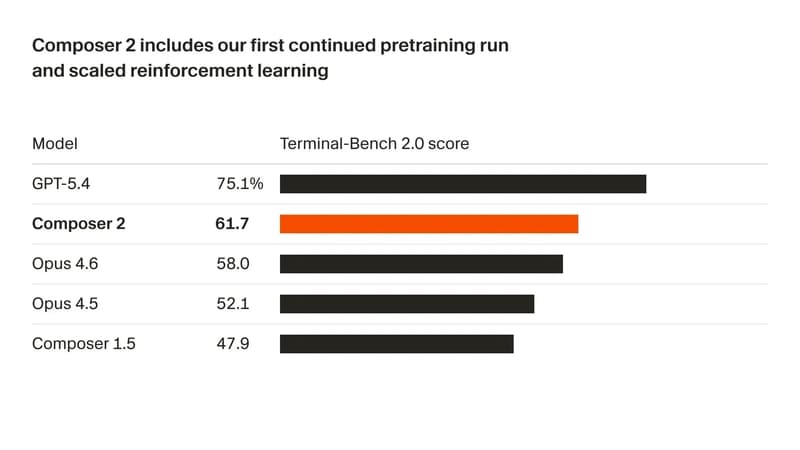
Composer 2: What is new and Compares with Claude Opus 4.6 & GPT-5.4
Dev.to
How UCP Breaks Your E-Commerce Tracking Stack: A Platform-by-Platform Analysis
Dev.to
AI Text Analyzer vs Asking Friends: Which Gives Better Perspective?
Dev.to
[D] Cathie wood claims ai productivity wave is starting, data shows 43% of ceos save 8+ hours weekly
Reddit r/MachineLearning

Microsoft hires top AI researchers from Allen Institute for AI for Suleyman's Superintelligence team
THE DECODER


