
CoRAL: Contact-Rich Adaptive LLM-based Control for Robotic Manipulation
arXiv cs.RO / 5/5/2026
📰 NewsDeveloper Stack & InfrastructureModels & Research
Key Points
- CoRAL (Contact-Rich Adaptive LLM-based control) is a modular framework that applies LLMs to contact-rich robotic manipulation by separating high-level reasoning from low-level adaptive control.
- Instead of using an LLM as a black-box controller, CoRAL uses the LLM to design context-aware cost functions for a sampling-based motion planner (MPPI), enabling zero-shot planning.
- The system adds a neuro-symbolic adaptation loop where a VLM supplies semantic priors (e.g., mass and friction) and online system identification refines physical parameters in real time based on interaction feedback.
- CoRAL also includes a retrieval-based memory unit to reuse previously successful strategies across repeated or related tasks, improving performance under recurring contact scenarios.
- In simulation and real-world hardware tests, CoRAL beats state-of-the-art VLA and foundation-model planners, achieving over 50% average success rates in unseen contact-rich tasks and handling sim-to-real through its adaptive physical understanding.
💡 Insights using this article
This article is featured in our daily AI news digest — key takeaways and action items at a glance.
Related Articles
Why Retail Chargeback Recovery Could Be AgentHansa's First Real PMF
Dev.to
Struggling with Qwen3.6 27B / 35B locally (3090) slow responses, breaking code looking for better setup + auto model switching
Reddit r/LocalLLaMA
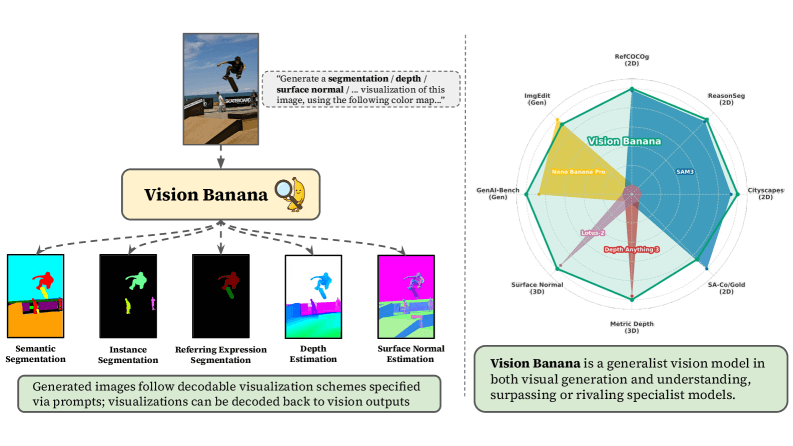
Last Week in AI #340 - OpenAI vs Musk + Microsoft, DeepSeek v4, Vision Banana
Last Week in AI

Trying to train tiny LLMs on length constrained reddit posts summarization task using GRPO on 3xMac Minis - updates!
Reddit r/LocalLLaMA

Uber Shares What Happens When 1.500 AI Agents Hit Production
Reddit r/artificial


