
In Depth We Trust: Reliable Monocular Depth Supervision for Gaussian Splatting
arXiv cs.CV / 4/8/2026
📰 NewsIdeas & Deep AnalysisModels & Research
Key Points
- The paper proposes a reliable way to use monocular depth priors to improve 3D Gaussian Splatting (GS) rendering, addressing issues like scale ambiguity, multi-view inconsistency, and local geometric errors from monocular depth models.
- It introduces a training framework that incorporates scale-ambiguous and noisy depth priors into geometric supervision, emphasizing learning from weakly aligned depth variations.
- The method includes an approach to identify ill-posed geometry so that monocular depth regularization is applied selectively, limiting the spread of depth inaccuracies into well-reconstructed 3D regions.
- Experiments across multiple datasets report consistent gains in geometric accuracy and improved rendering quality across different GS variants and different monocular depth backbones.
Related Articles

30 Days, $0, Full Autonomy: The Real Report on Running an AI Agent Without a Credit Card
Dev.to
We are building an OS for AI-built software. Here's what that means
Dev.to
Claude Code Forgot My Code. Here's Why.
Dev.to
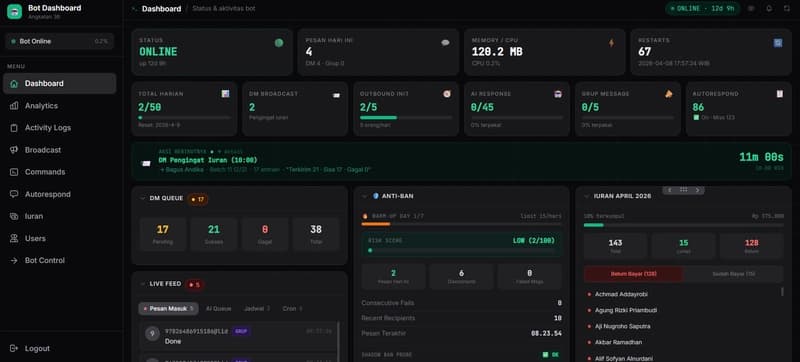
Whats'App Ai Assistant
Dev.to

I Built a $70K Security Bounty Pipeline with AI — Here's the Exact Workflow
Dev.to


