
RouteLMT: Learned Sample Routing for Hybrid LLM Translation Deployment
arXiv cs.CL / 4/27/2026
📰 NewsDeveloper Stack & InfrastructureIdeas & Deep AnalysisModels & Research
Key Points
- The paper addresses the high cost of deploying LLMs for machine translation by using a hybrid setup that routes only a fraction of requests to a large model while the rest go to a small model.
- It reframes routing as a budget allocation problem and defines the key decision signal as the “marginal gain,” meaning the improvement the large model provides over the small model.
- RouteLMT is introduced as an efficient in-model router that predicts this expected gain by probing the small translator’s prompt-token representation, avoiding reliance on external predictors or hypothesis decoding.
- Experiments show RouteLMT beats heuristic and quality/difficulty estimation baselines, producing a better quality–budget Pareto frontier.
- The authors also study regression risks and propose a guarded variant to reduce the chance of severe quality drops.
💡 Insights using this article
This article is featured in our daily AI news digest — key takeaways and action items at a glance.
Related Articles
LLMs will be a commodity
Reddit r/artificial
Indian Developers: How to Build AI Side Income with $0 Capital in 2026
Dev.to

What it feels like to have to have Qwen 3.6 or Gemma 4 running locally
Reddit r/LocalLLaMA
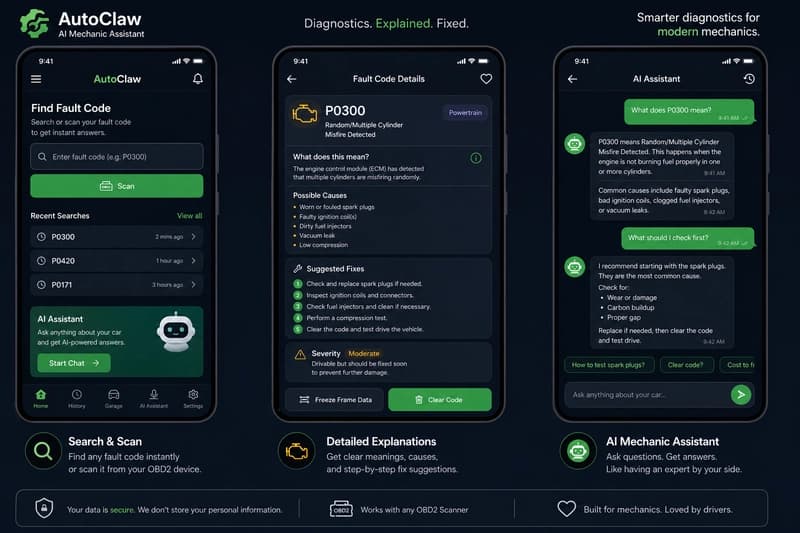
From Fault Codes to Smart Fixes: How Google Cloud NEXT ’26 Inspired My AI Mechanic Assistant
Dev.to

Dex lands $5.3M to grow its AI-driven talent matching platform
Tech.eu


