
To Adapt or not to Adapt, Rethinking the Value of Medical Knowledge-Aware Large Language Models
arXiv cs.CL / 4/9/2026
💬 OpinionIdeas & Deep AnalysisModels & Research
Key Points
- The study evaluates whether medical-knowledge-aware (clinical) LLMs reliably beat general-purpose LLMs on multiple-choice clinical QA in English and Spanish, using both standard and perturbation-based robustness benchmarks.
- Results indicate clinical LLMs do not consistently outperform general-purpose models on English tasks, and improvements are described as marginal and unstable even under adversarial/perturbed evaluations.
- In contrast, for Spanish subsets the introduced Marmoka 8B clinical LLM family performs better than a Llama-based general counterpart, suggesting adaptation can help in low-resource settings.
- The authors also find that both general and clinical models commonly struggle with instruction following and strict output formatting, implying current short-form MCQA benchmarks may miss aspects of true medical competence.
- They propose that robust medical LLMs can be developed for low-resource languages via continual domain-adaptive pretraining on medical corpora and instruction data.
💡 Insights using this article
This article is featured in our daily AI news digest — key takeaways and action items at a glance.
Related Articles

Big Tech firms are accelerating AI investments and integration, while regulators and companies focus on safety and responsible adoption.
Dev.to

Could it be that this take is not too far fetched?
Reddit r/LocalLLaMA
npm audit Is Broken — Here's the Claude Code Skill I Built to Fix It
Dev.to

Meta Launches Muse Spark: A New AI Model for Everyday Use
Dev.to
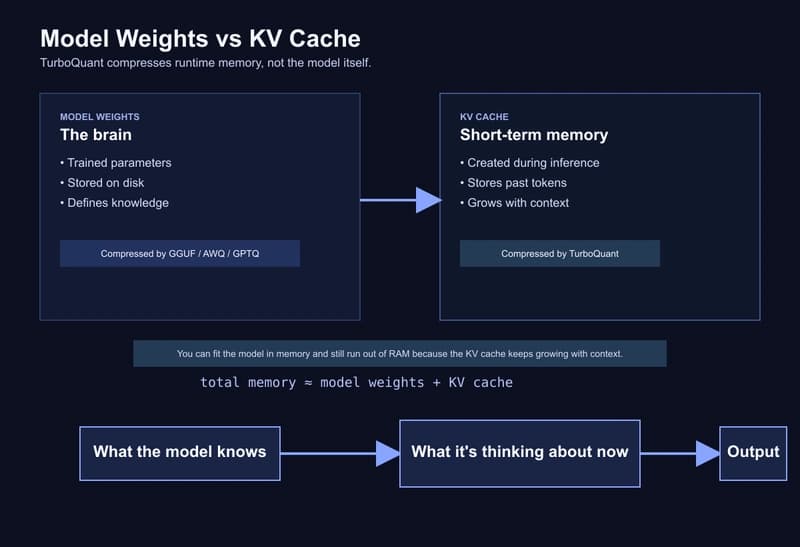
TurboQuant on a MacBook: building a one-command local stack with Ollama, MLX, and an automatic routing proxy
Dev.to


