
Parameter-Efficient Multi-View Proficiency Estimation: From Discriminative Classification to Generative Feedback
arXiv cs.CV / 5/6/2026
📰 NewsIdeas & Deep AnalysisModels & Research
Key Points
- The paper focuses on estimating a person’s proficiency (how well they perform) rather than identifying the action itself, which is important for coaching, rehabilitation, and talent scouting.
- It summarizes three advances for multi-view proficiency estimation on the Ego-Exo4D dataset: SkillFormer (parameter-efficient selective multi-view fusion), PATS (temporal sampling that keeps locally dense excerpts), and ProfVLM (turning proficiency estimation into conditional language generation).
- ProfVLM is designed to output both a proficiency score/label and expert-style feedback, moving the task from closed-set classification toward more interpretable and actionable outputs.
- Across the reported experiments, the combined approach reaches state-of-the-art accuracy on Ego-Exo4D while using up to 20x fewer trainable parameters and up to 3x fewer training epochs than video-transformer baselines.
- The overall trend highlighted is a shift toward efficient, multi-view systems that integrate selective fusion, proficiency-aware temporal sampling, and generative feedback that can guide users.
Related Articles

Top 10 Free AI Tools for Students in 2026: The Ultimate Study Guide
Dev.to

AI as Your Contingency Co-Pilot: Automating Wedding Day 'What-Ifs'
Dev.to
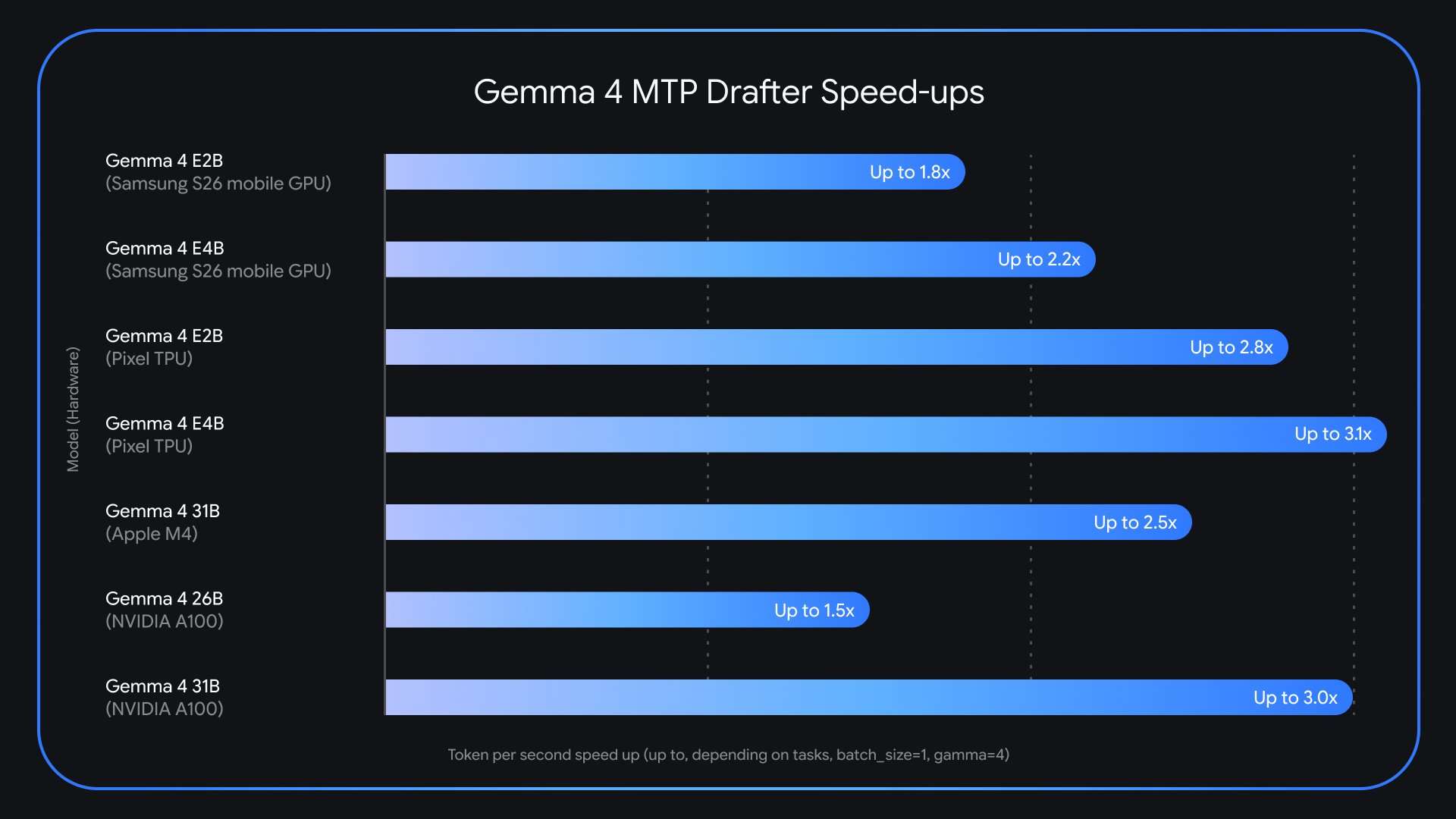
Google AI Releases Multi-Token Prediction (MTP) Drafters for Gemma 4: Delivering Up to 3x Faster Inference Without Quality Loss
MarkTechPost
When Claude Hallucinates in Court: The Latham & Watkins Incident and What It Means for Attorney Liability
MarkTechPost
Solidity LM surpasses Opus
Reddit r/LocalLLaMA


