
When Chain-of-Thought Fails, the Solution Hides in the Hidden States
arXiv cs.CL / 4/28/2026
📰 NewsIdeas & Deep AnalysisModels & Research
Key Points
- The study examines whether chain-of-thought (CoT) intermediate tokens are computationally useful by testing if token-level hidden states contain task-relevant information.
- Using mechanistic causal analysis with activation patching on GSM8K, the researchers transfer hidden states from a CoT run into a direct-answer run and find that patched generation can significantly outperform both direct prompting and the original (possibly incorrect) CoT trace.
- Task-relevant information in CoT appears more often in correct than incorrect runs, is unevenly distributed across tokens, and concentrates in mid-to-late transformer layers, often showing up earlier in the reasoning.
- The paper finds that linguistic tokens (e.g., verbs and entities) are more likely to steer reasoning toward correctness, while mathematical tokens tend to encode answer-proximal details that are less effective for recovery.
- Patched outputs are frequently shorter than full CoT chains yet achieve higher accuracy, implying that complete step-by-step reasoning traces may not always be required to solve the problem.
Related Articles

Big Tech firms are accelerating AI investments and integration, while regulators and companies focus on safety and responsible adoption.
Dev.to
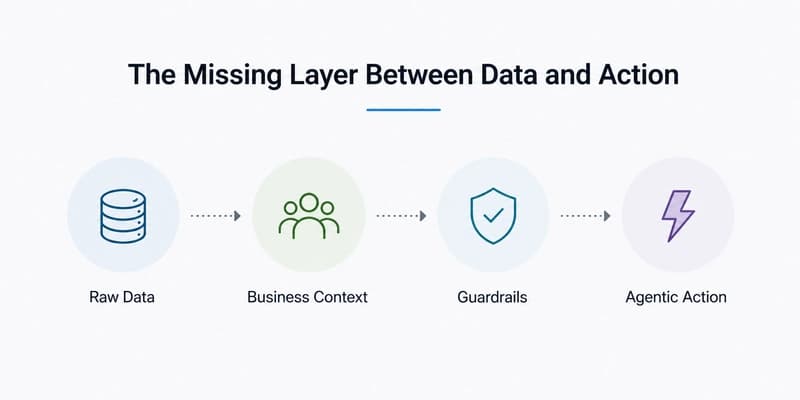
Everyone Wants AI Agents. Fewer Teams Are Ready for the Messy Business Context Behind Them
Dev.to
AI 编程工具对比 2026:Claude Code vs Cursor vs Gemini CLI vs Codex
Dev.to

How I Improved My YouTube Shorts and Podcast Audio Workflow with AI Tools
Dev.to

An improvement of the convergence proof of the ADAM-Optimizer
Dev.to


