
ART: Attention Replacement Technique to Improve Factuality in LLMs
arXiv cs.CL / 4/9/2026
💬 OpinionSignals & Early TrendsIdeas & Deep AnalysisModels & Research
Key Points
- The paper investigates how attention patterns inside LLM layers and heads relate to hallucinations, finding that shallow layers often use uniform, evenly distributed attention that can cause the model to miss relevant context.
- It introduces a training-free method called Attention Replacement Technique (ART) that swaps shallow-layer uniform attention with local attention to encourage focus on pertinent segments.
- Experiments across multiple LLM architectures show ART significantly reduces hallucinations in question answering and related factuality-sensitive tasks.
- The approach is designed to be generalizable and effective without fine-tuning or requiring additional training data, making it easier to adopt in existing deployments.
- Overall, the work reframes hallucination mitigation as something influenced by internal attention behavior rather than only output-level decoding tricks.
Related Articles

Black Hat Asia
AI Business
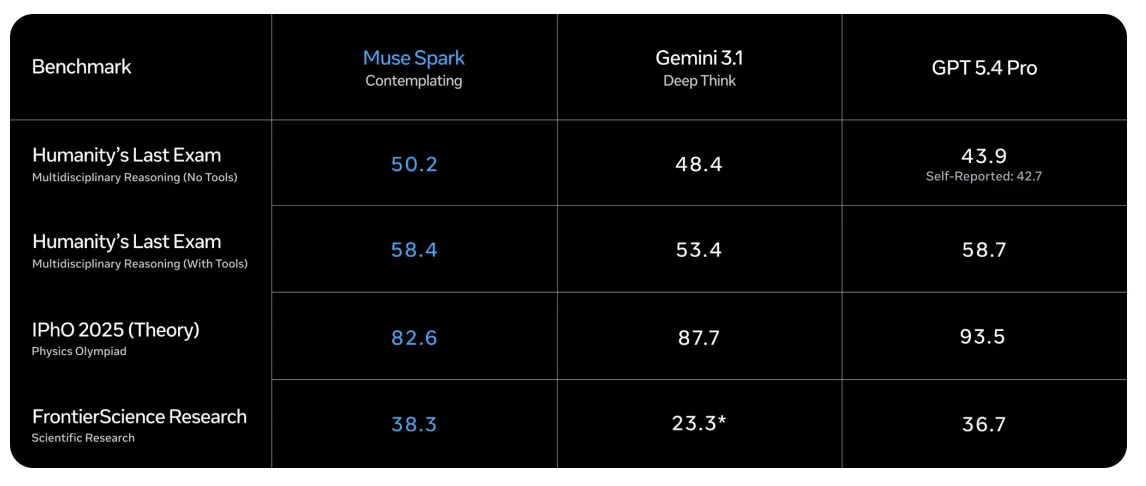
Meta Superintelligence Lab Releases Muse Spark: A Multimodal Reasoning Model With Thought Compression and Parallel Agents
MarkTechPost
Chatbots are great at manipulating people to buy stuff, Princeton boffins find
The Register
I tested and ranked every ai companion app I tried and here's my honest breakdown
Reddit r/artificial
Big Tech firms are accelerating AI investments and integration, while regulators and companies focus on safety and responsible adoption.
Dev.to


