
A Few-Step Generative Model on Cumulative Flow Maps
arXiv cs.LG / 5/6/2026
📰 NewsIdeas & Deep AnalysisModels & Research
Key Points
- The paper introduces a unified, few-step generative modeling framework based on cumulative flow maps to model long-range transport in probability space.
- It uses a cumulative-flow abstraction that links local, instantaneous updates with finite-time transport, allowing models to reason about global state transitions.
- The approach is designed to be generally applicable to existing diffusion- and flow-based models by focusing on cumulative transport and cumulative parameterization rather than a specific model instantiation.
- It enables one-step or few-step generation while maintaining synthesis quality, with only minimal adjustments to time embeddings and training objectives and no need to increase model capacity.
- Experiments across multiple domains (image generation, geometric distribution modeling, joint prediction, and SDF generation) show improved efficiency via reduced inference cost.
Related Articles

Top 10 Free AI Tools for Students in 2026: The Ultimate Study Guide
Dev.to
AI as Your Contingency Co-Pilot: Automating Wedding Day 'What-Ifs'
Dev.to
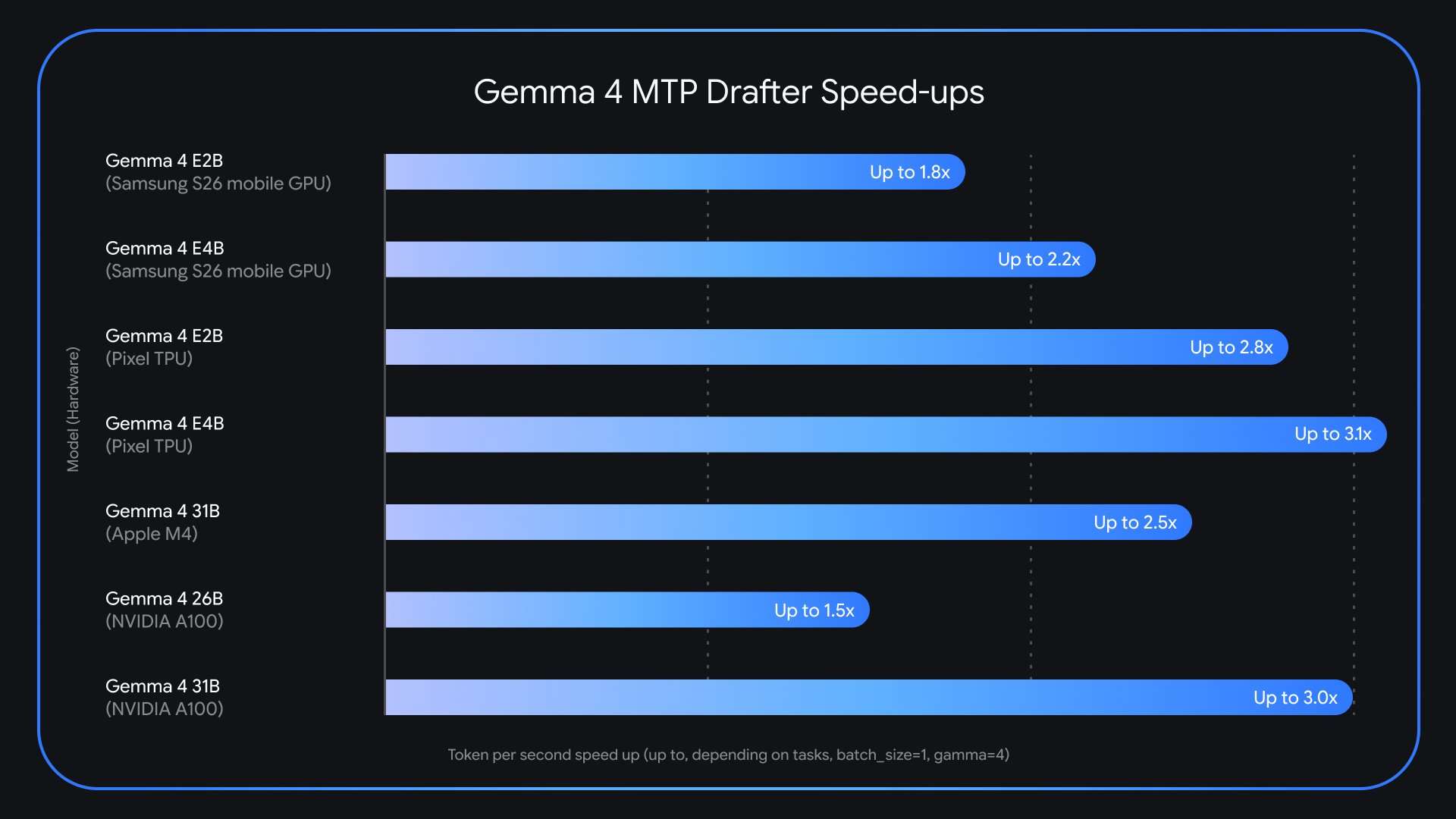
Google AI Releases Multi-Token Prediction (MTP) Drafters for Gemma 4: Delivering Up to 3x Faster Inference Without Quality Loss
MarkTechPost
When Claude Hallucinates in Court: The Latham & Watkins Incident and What It Means for Attorney Liability
MarkTechPost
Solidity LM surpasses Opus
Reddit r/LocalLLaMA


