
Disease Is a Spectral Perturbation
arXiv cs.LG / 5/6/2026
📰 NewsModels & Research
Key Points
- The paper introduces a spectral framework to explain how a disease transforms biomarker behavior starting from a healthy baseline, with biomarker-level interpretability.
- It models biomarker covariance via a “Hamiltonian” matrix H = X^T X / n whose eigenvectors represent normal modes of biomarker coordination and eigenvalues represent mode “energy.”
- Disease is treated as an additive perturbation ΔH to the healthy Hamiltonian H0, and the method derives how this perturbation shifts eigenvalues and rotates eigenvectors according to pathological severity.
- The authors claim that projecting a newly diagnosed patient’s cumulative biomarker covariance onto disease-discriminant eigenmodes yields an optimal prognostic statistic for more precise disease prognosis.
- The approach is positioned as broadly applicable across many disease areas, from cancer to neurodegenerative disorders.
Related Articles
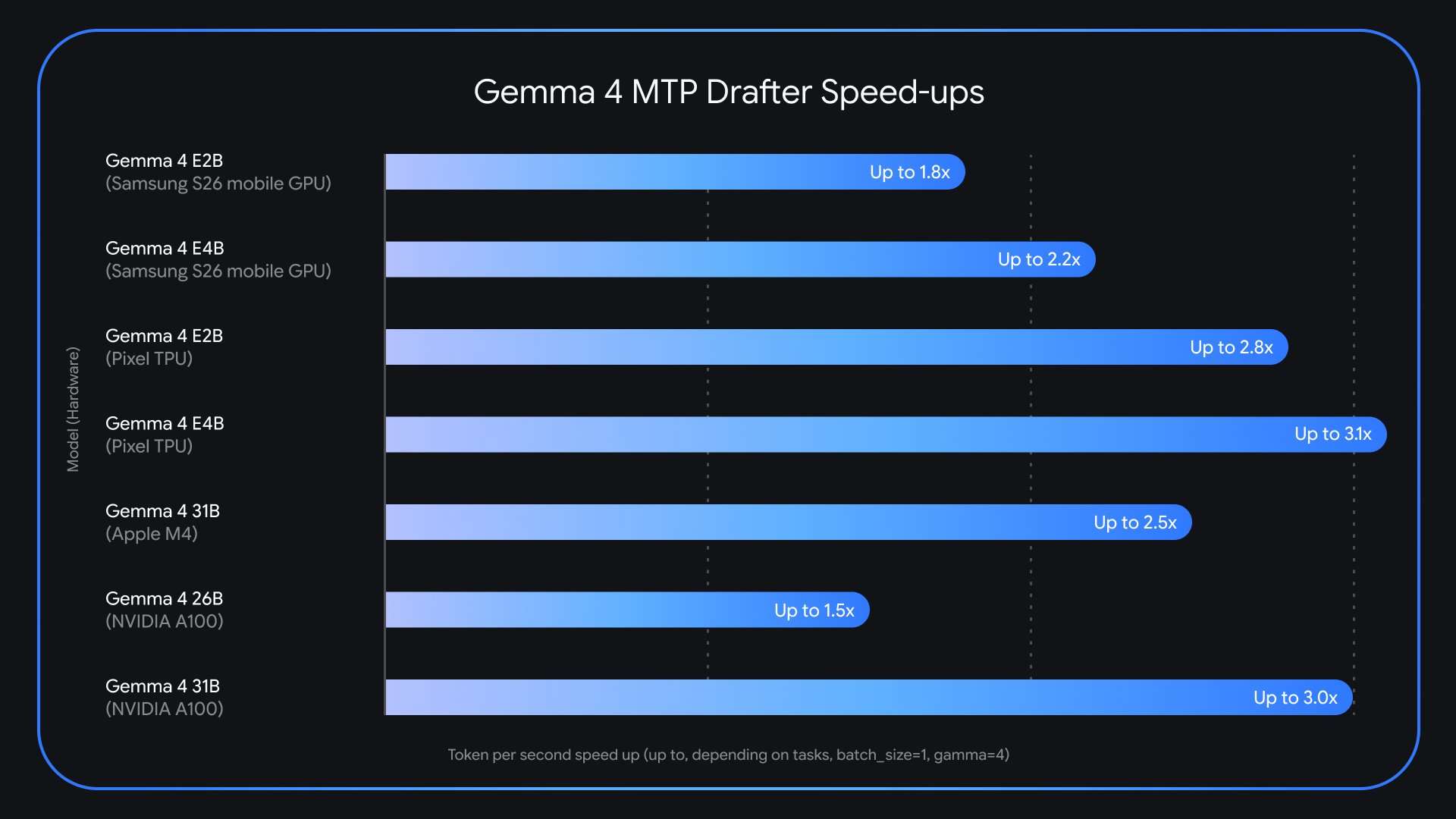
Google AI Releases Multi-Token Prediction (MTP) Drafters for Gemma 4: Delivering Up to 3x Faster Inference Without Quality Loss
MarkTechPost
Solidity LM surpasses Opus
Reddit r/LocalLLaMA

Quality comparison between Qwen 3.6 27B quantizations (BF16, Q8_0, Q6_K, Q5_K_XL, Q4_K_XL, IQ4_XS, IQ3_XXS,...)
Reddit r/LocalLLaMA

We measured the real cost of running a GPT-5.4 chatbot on live websites
Reddit r/artificial

AI ecosystems in China and US grow apart amid tech war
SCMP Tech


