
ROS 2-Based LiDAR Perception Framework for Mobile Robots in Dynamic Production Environments, Utilizing Synthetic Data Generation, Transformation-Equivariant 3D Detection and Multi-Object Tracking
arXiv cs.RO / 4/3/2026
💬 OpinionIdeas & Deep AnalysisModels & Research
Key Points
- The paper proposes a ROS 2-based LiDAR perception framework for mobile robots that targets 6D pose estimation and multi-object tracking in dynamic industrial production environments.
- It trains a Transformation-Equivariant 3D detector using synthetic data to reduce dependency on real-world data while improving noise robustness and spatiotemporal consistency.
- The framework integrates multi-object tracking using “center poses,” improving detection-to-tracking continuity over standalone pose estimation.
- On 72 motion-capture-evaluated scenarios, the authors report IoU of 62.6% for standalone 6D pose estimation and 83.12% after adding multi-object tracking.
- The system also achieves 91.12% Higher Order Tracking Accuracy, indicating stronger robustness and versatility for LiDAR-based perception in industrial mobile manipulators.
Related Articles

90000 Tech Workers Got Fired This Year and Everyone Is Blaming AI but Thats Not the Whole Story
Dev.to

Microsoft’s $10 Billion Japan Bet Shows the Next AI Battleground Is National Infrastructure
Dev.to
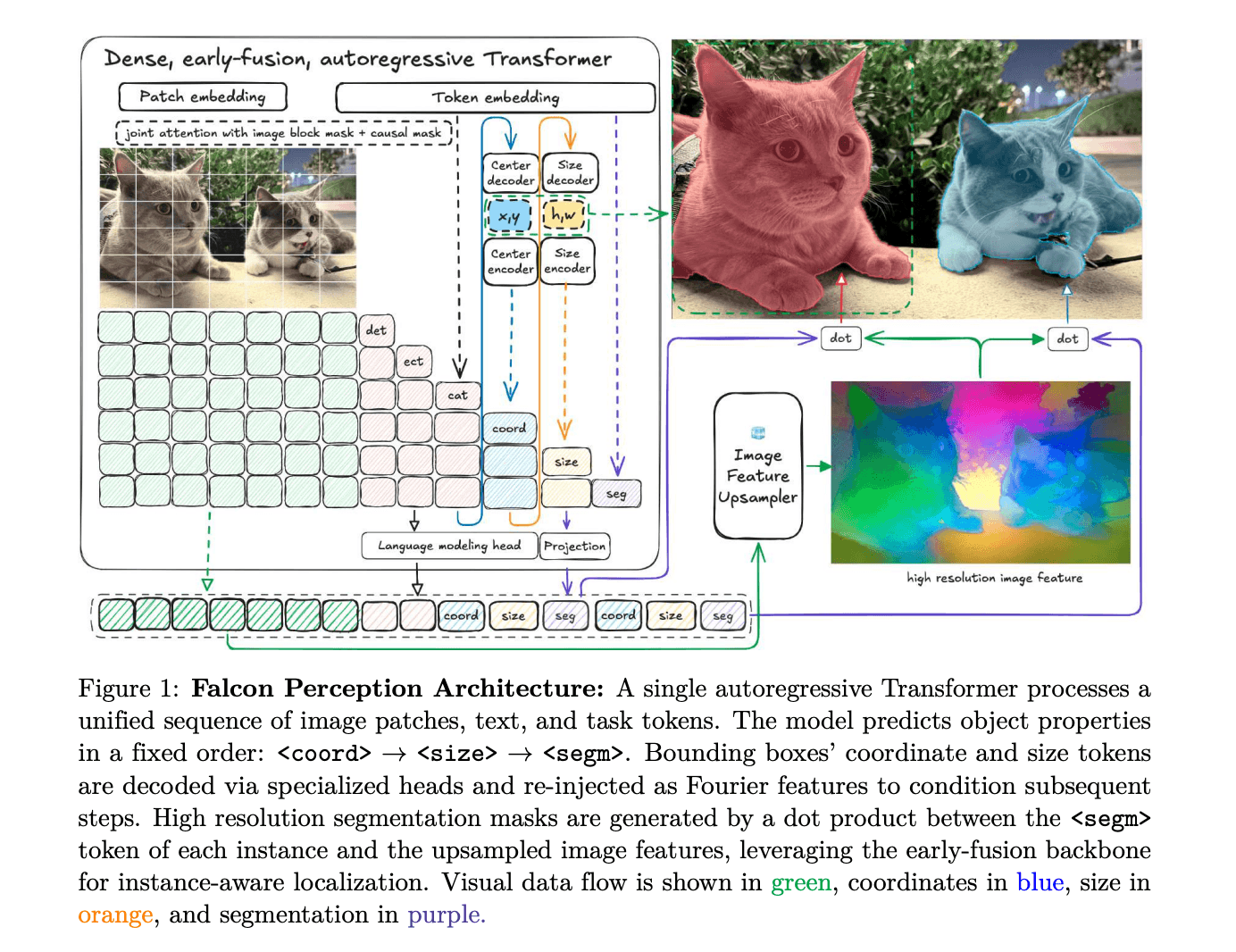
TII Releases Falcon Perception: A 0.6B-Parameter Early-Fusion Transformer for Open-Vocabulary Grounding and Segmentation from Natural Language Prompts
MarkTechPost

The house asked me a question
Dev.to

Precision Clip Selection: How AI Suggests Your In and Out Points
Dev.to


