
Labeled TrustSet Guided: Batch Active Learning with Reinforcement Learning
arXiv cs.LG / 4/15/2026
💬 OpinionIdeas & Deep AnalysisModels & Research
Key Points
- The paper addresses limitations of traditional batch active learning by proposing TrustSet, which selects informative samples from labeled data while enforcing balanced class distribution to reduce long-tail effects.
- TrustSet improves on approaches like CoreSet by using labeled feedback and model-oriented criteria (pruning redundancy) rather than relying mainly on unlabeled-data distribution metrics such as Mahalanobis distance.
- To extend TrustSet’s labeled-data gains to the unlabeled pool, the authors introduce an RL-based sampling policy that approximates choosing high-quality TrustSet candidates from unlabeled data.
- The combined method, BRAL-T (Batch Reinforcement Active Learning with TrustSet), is reported to reach state-of-the-art performance across 10 image classification benchmarks and 2 active fine-tuning tasks.
- Overall, the work aims to reduce labeling costs and improve data efficiency for training large-scale deep learning models by leveraging both labeled information and reinforcement learning-driven selection.
Related Articles
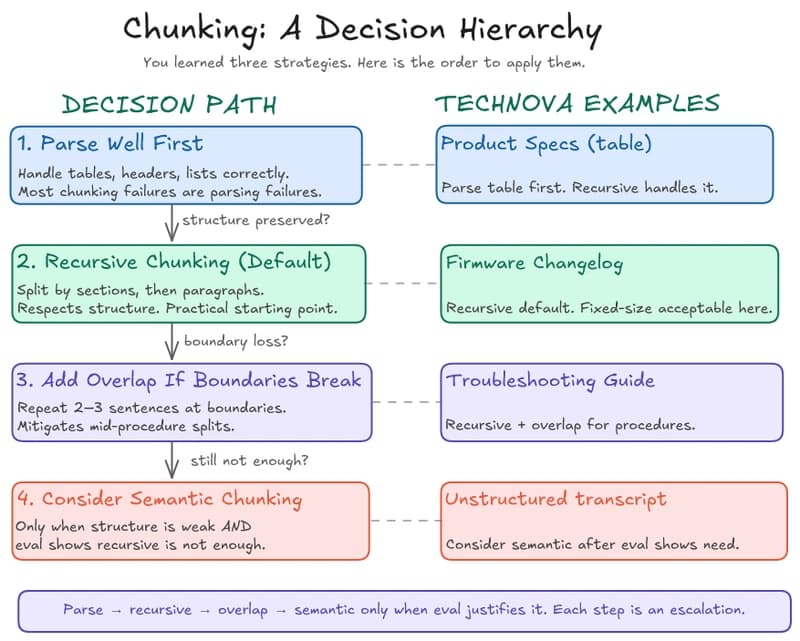
RAG in Practice — Part 4: Chunking, Retrieval, and the Decisions That Break RAG
Dev.to
Why dynamically routing multi-timescale advantages in PPO causes policy collapse (and a simple decoupled fix) [R]
Reddit r/MachineLearning
How AI Interview Assistants Are Changing Job Preparation in 2026
Dev.to
Consciousness in Artificial Intelligence: Insights from the Science ofConsciousness
Dev.to

NEW PROMPT INJECTION
Dev.to


