
Learning Reactive Dexterous Grasping via Hierarchical Task-Space RL Planning and Joint-Space QP Control
arXiv cs.RO / 5/6/2026
📰 NewsDeveloper Stack & InfrastructureModels & Research
Key Points
- The paper presents a hierarchical reactive dexterous grasping framework that separates high-level task-space intent from low-level joint execution for safer, more controllable behavior.
- It uses a multi-agent reinforcement learning setup (separate arm and hand agents) to generate desired task-space velocity commands, which are then converted into feasible joint velocities via a GPU-parallelized quadratic programming (QP) controller.
- The QP layer enforces kinematic limits and collision avoidance, aiming to both speed up training convergence and provide strict hardware safety guarantees.
- The authors claim zero-shot steerability, enabling operators to adjust safety margins and react to dynamic obstacles without retraining the policy.
- Simulation-to-reality validation, including real-world experiments on a 7-DoF arm with a 20-DoF anthropomorphic hand, shows robust zero-shot transfer to previously unseen objects and recovery from unexpected disturbances.
Related Articles

SIFS (SIFS Is Fast Search) - local code search for coding agents
Dev.to
BizNode's semantic memory (Qdrant) makes your bot smarter over time — it remembers past conversations and answers...
Dev.to
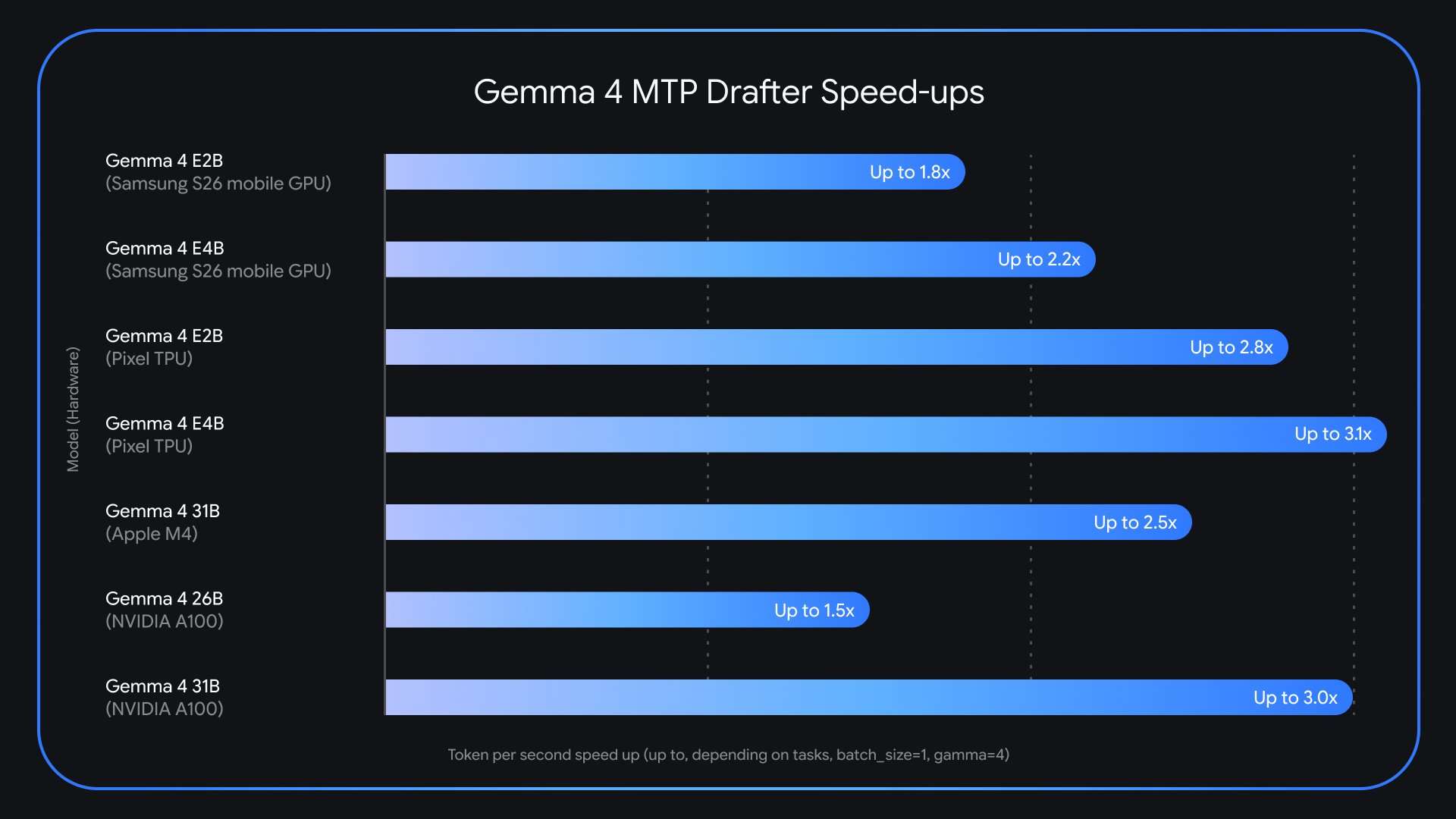
Google AI Releases Multi-Token Prediction (MTP) Drafters for Gemma 4: Delivering Up to 3x Faster Inference Without Quality Loss
MarkTechPost
Solidity LM surpasses Opus
Reddit r/LocalLLaMA

Quality comparison between Qwen 3.6 27B quantizations (BF16, Q8_0, Q6_K, Q5_K_XL, Q4_K_XL, IQ4_XS, IQ3_XXS,...)
Reddit r/LocalLLaMA


