
Non-Adversarial Imitation Learning Provably Free of Compounding Errors: The Role of Bellman Constraints
arXiv cs.LG / 3/25/2026
💬 OpinionSignals & Early TrendsIdeas & Deep AnalysisModels & Research
Key Points
- The paper argues that popular non-adversarial, Q-based imitation learning methods like IQ-Learn can theoretically reduce to behavioral cloning and still exhibit a provable lower bound on the imitation gap with quadratic dependence on horizon, meaning they can still suffer from compounding errors.
- It explains why IQ-Learn may fail to generalize: it uniformly suppresses Q-values for actions on states not covered well by demonstrations, limiting the ability to recover expert behavior outside the demonstrated state distribution.
- To fix this, the authors propose Dual Q-DM, a primal-dual distribution-matching framework that adds Bellman constraints to propagate value information from visited states to unvisited ones.
- The paper claims Dual Q-DM is provably equivalent to adversarial imitation learning in a way that can recover expert actions beyond demonstrations and theoretically eliminate compounding errors.
- Theoretical guarantees are supported by experiments, which the authors say corroborate the derived claims about generalization and compounding-error mitigation.
Related Articles

Lemonade 10.0.1 improves setup process for using AMD Ryzen AI NPUs on Linux
Reddit r/artificial
The 2026 Developer Showdown: Claude Code vs. Google Antigravity
Dev.to

Google March 2026 Spam Update: SEO Impact and What to Do Now | MKDM
Dev.to
CRM Development That Drives Growth
Dev.to
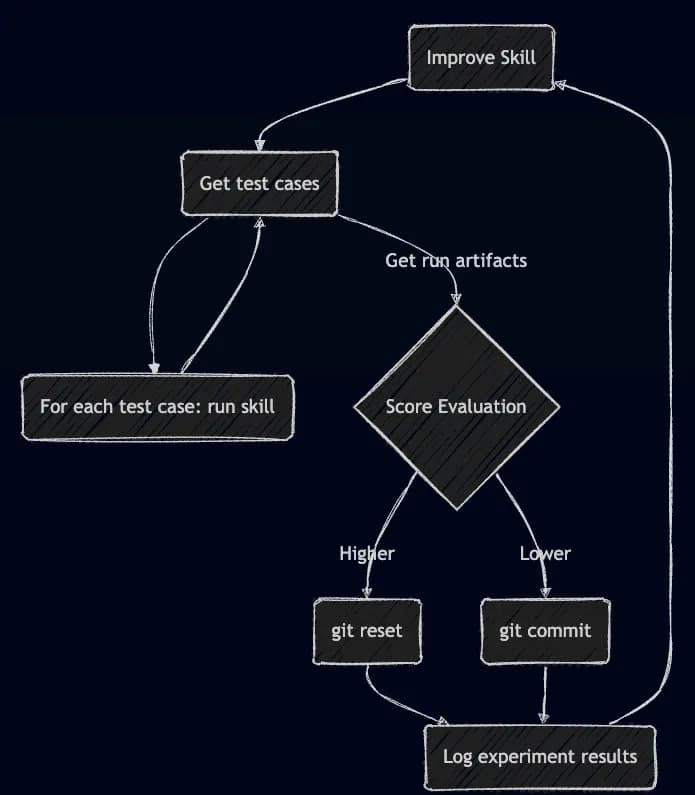
Karpathy's Autoresearch: Improving Agentic Coding Skills
Dev.to


