
Benchmarking LightGBM and BiLSTM for Sentiment Analysis on Indonesian E-Commerce Reviews
arXiv cs.CL / 5/5/2026
📰 NewsModels & Research
Key Points
- The study compares traditional machine learning via PyCaret AutoML and deep learning for Indonesian e-commerce sentiment analysis using a 15,000-sample dataset from Hugging Face.
- For ML, it evaluates LightGBM, Logistic Regression, and SVM, while the DL approach uses a BiLSTM (Bidirectional LSTM) network to model sequential context.
- The results show the BiLSTM model achieves the best performance overall, reaching 98.87% accuracy and an F1-score of 98.87%.
- Among the ML methods, LightGBM performs best with 98.23% accuracy while also requiring highly efficient training time.
- The authors conclude that BiLSTM is especially effective for capturing the sequential semantics in Indonesian review text for this sentiment classification task.
Related Articles

Why Retail Chargeback Recovery Could Be AgentHansa's First Real PMF
Dev.to
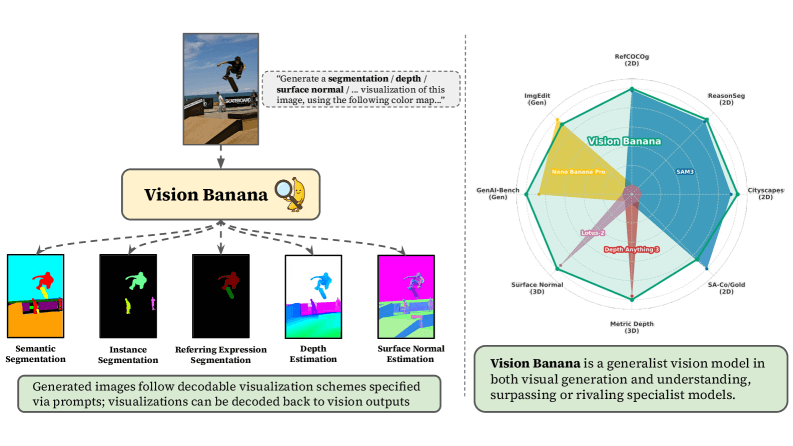
Last Week in AI #340 - OpenAI vs Musk + Microsoft, DeepSeek v4, Vision Banana
Last Week in AI

Trying to train tiny LLMs on length constrained reddit posts summarization task using GRPO on 3xMac Minis - updates!
Reddit r/LocalLLaMA

Uber Shares What Happens When 1.500 AI Agents Hit Production
Reddit r/artificial
vibevoice.cpp: Microsoft VibeVoice (TTS + long-form ASR with diarization) ported to ggml/C++, runs on CPU/CUDA/Metal/Vulkan, no Python at inference
Reddit r/LocalLLaMA


