
RPRA: Predicting an LLM-Judge for Efficient but Performant Inference
arXiv cs.AI / 4/15/2026
📰 NewsSignals & Early TrendsIdeas & Deep AnalysisModels & Research
Key Points
- The paper proposes Predict-Answer/Act (PA) and Reason-Predict-Reason-Answer/Act (RPRA) methods where smaller LLMs predict how an LLM judge would score their output before deciding whether to answer or defer to a larger model.
- It evaluates three judge-score prediction strategies—zero-shot prediction, in-context “report card” prompting, and supervised fine-tuning—showing different strengths across model sizes and judge types.
- Results indicate that larger (especially reasoning) models can predict generic LLM judges effectively in a zero-shot setup, while smaller models need fine-tuning or report cards to achieve reliable prediction quality.
- Across datasets, report cards and supervised fine-tuning improve smaller-model judge prediction accuracy by up to 55% and 52% respectively, supporting more efficient inference without sacrificing performance.
- The findings suggest that models can learn to recognize their own limitations, enabling more “self-aware” systems that route queries to appropriate model sizes.
Related Articles

Black Hat Asia
AI Business

The Complete Guide to Better Meeting Productivity with AI Note-Taking
Dev.to

5 Ways Real-Time AI Can Boost Your Sales Call Performance
Dev.to
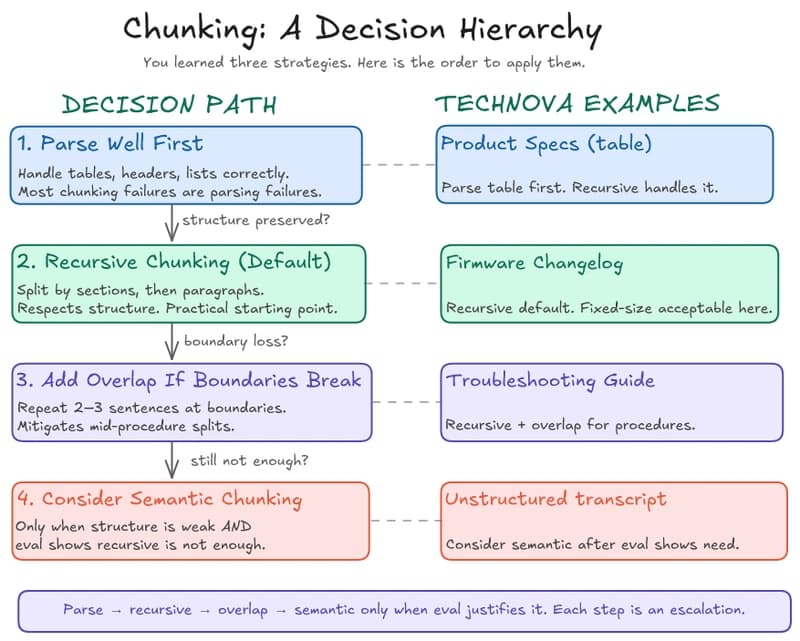
RAG in Practice — Part 4: Chunking, Retrieval, and the Decisions That Break RAG
Dev.to
Why dynamically routing multi-timescale advantages in PPO causes policy collapse (and a simple decoupled fix) [R]
Reddit r/MachineLearning


