
Latent Bridge: Feature Delta Prediction for Efficient Dual-System Vision-Language-Action Model Inference
arXiv cs.RO / 5/5/2026
📰 NewsDeveloper Stack & InfrastructureModels & Research
Key Points
- Latent Bridge addresses an inference bottleneck in dual-system Vision-Language-Action (VLA) robotics models by reducing redundant computation in the Vision-Language Model (VLM) backbone across control steps.
- It predicts timestep-to-timestep VLM output deltas using a lightweight model, allowing the action head to use predicted features while the expensive VLM backbone is invoked only periodically.
- The method is implemented in two different VLA variants (GR00T-N1.6 as a feature-space bridge and π0.5 as a KV-cache bridge), showing the approach generalizes across architectures.
- Using a task-agnostic DAgger training pipeline, Latent Bridge maintains 95–100% performance retention across multiple benchmarks while cutting VLM calls by 50–75% and improving net per-episode speed by about 1.65–1.73×.
💡 Insights using this article
This article is featured in our daily AI news digest — key takeaways and action items at a glance.
Related Articles
Why Retail Chargeback Recovery Could Be AgentHansa's First Real PMF
Dev.to
Struggling with Qwen3.6 27B / 35B locally (3090) slow responses, breaking code looking for better setup + auto model switching
Reddit r/LocalLLaMA
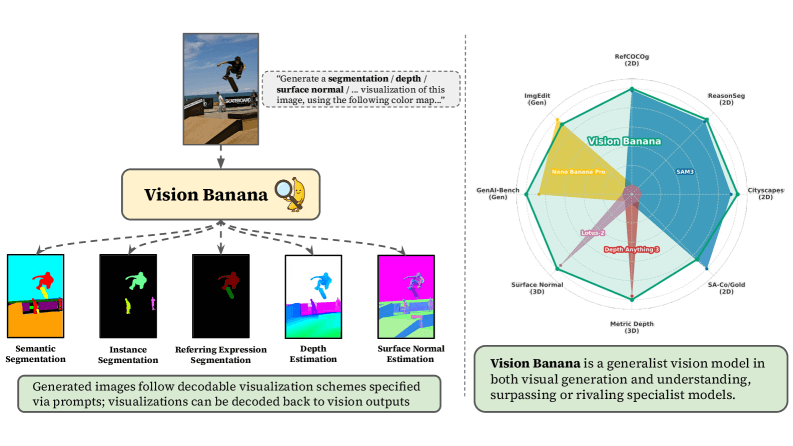
Last Week in AI #340 - OpenAI vs Musk + Microsoft, DeepSeek v4, Vision Banana
Last Week in AI

Trying to train tiny LLMs on length constrained reddit posts summarization task using GRPO on 3xMac Minis - updates!
Reddit r/LocalLLaMA

Uber Shares What Happens When 1.500 AI Agents Hit Production
Reddit r/artificial


