
Geometrical Cross-Attention and Nonvoid Voxelization for Efficient 3D Medical Image Segmentation
arXiv cs.CV / 4/8/2026
💬 OpinionSignals & Early TrendsIdeas & Deep AnalysisModels & Research
Key Points
- The paper introduces GCNV-Net, a 3D medical image segmentation framework designed to improve both accuracy and computational efficiency across different organs and imaging modalities.
- It combines a Tri-directional Dynamic Nonvoid Voxel Transformer that partitions voxels along three anatomical planes with a Geometrical Cross-Attention module that fuses multi-scale features using explicit geometric positional information.
- A Nonvoid Voxelization strategy reduces computation by processing only informative voxel regions, cutting FLOPs by 56.13% and inference latency by 68.49% versus conventional voxelization.
- Across multiple benchmarks (BraTS2021, ACDC, MSD Prostate, MSD Pancreas, AMOS2022), the method reports state-of-the-art results, outperforming prior best methods by 0.65% Dice, 0.63% IoU, 1% NSD, and about 14.5% HD95.
- The authors argue the approach provides a strong accuracy–efficiency balance and robustness suitable for potential clinical deployment.
Related Articles

Black Hat Asia
AI Business

The enforcement gap: why finding issues was never the problem
Dev.to
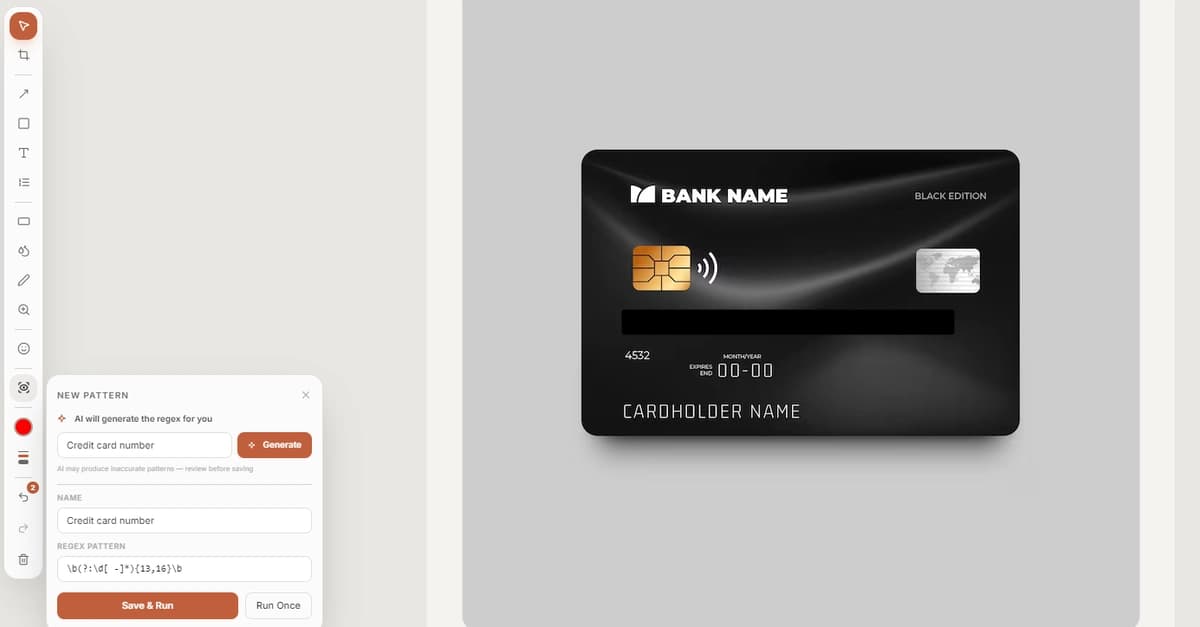
How I Built AI-Powered Auto-Redaction Into a Desktop Screenshot Tool
Dev.to

Agentic AI vs Traditional Automation: Why They Require Different Approaches in Modern Enterprises
Dev.to
Agentic AI vs Traditional Automation: Why Modern Enterprises Must Treat Them Differently
Dev.to


