
Structured Diffusion Bridges: Inductive Bias for Denoising Diffusion Bridges
arXiv cs.LG / 5/6/2026
📰 NewsIdeas & Deep AnalysisModels & Research
Key Points
- The paper proposes “Structured Diffusion Bridges,” a framework for modality translation that addresses the under-constrained nature of cross-modal mapping.
- Instead of assuming fully paired data as a hard requirement, it models the admissible solution space and narrows it using alignment constraints, with paired supervision treated as optional.
- Experiments on synthetic and real modality-translation benchmarks evaluate performance across unpaired, semi-paired, and paired settings, finding consistent results regardless of supervision level.
- The authors report that the method can achieve near fully-paired quality while substantially relaxing the need for paired data, and it remains applicable even in the unpaired regime.
- Overall, the work positions diffusion bridges as a flexible foundation for modality translation beyond fully paired datasets.
Related Articles

Top 10 Free AI Tools for Students in 2026: The Ultimate Study Guide
Dev.to

AI as Your Contingency Co-Pilot: Automating Wedding Day 'What-Ifs'
Dev.to
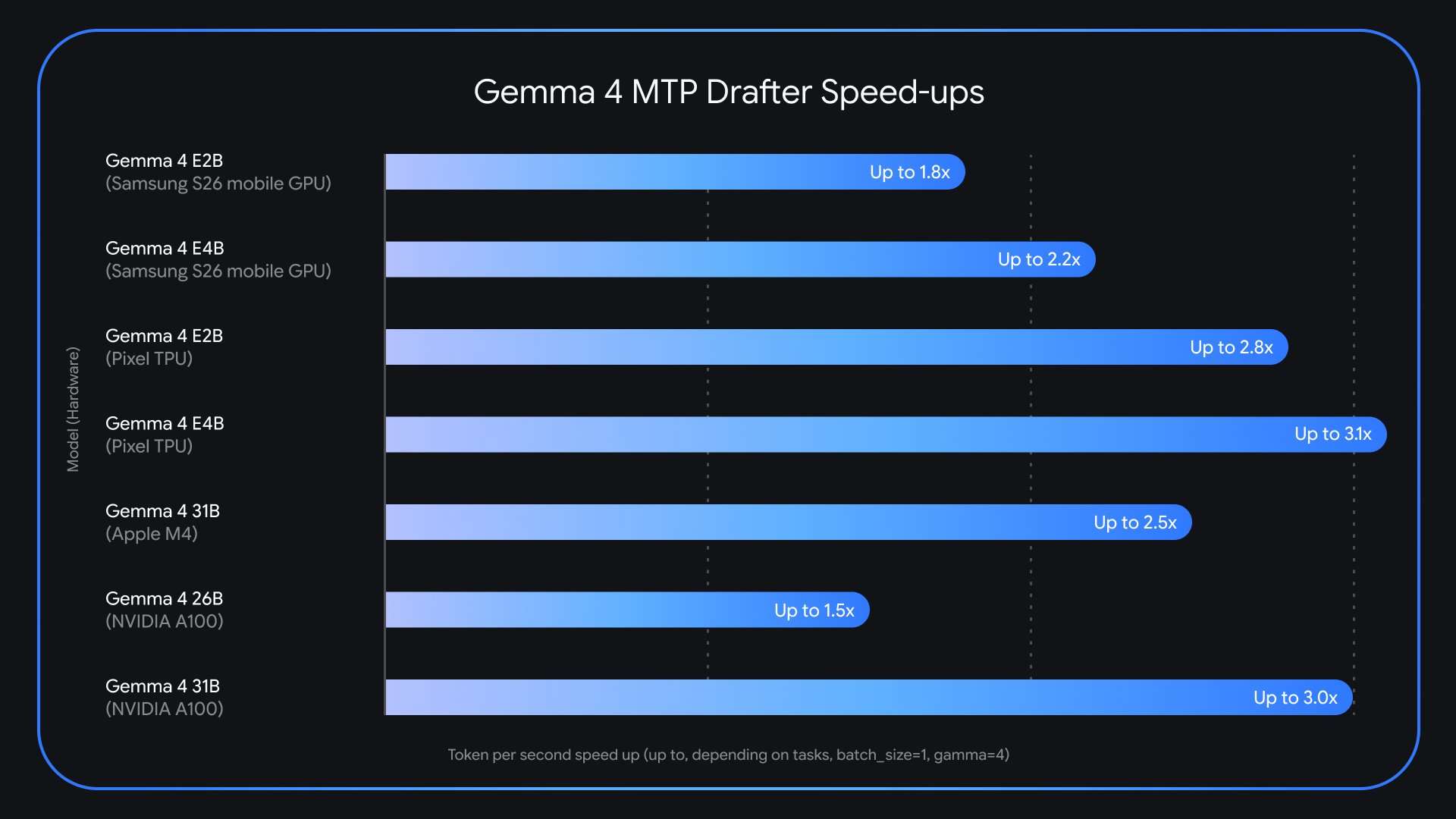
Google AI Releases Multi-Token Prediction (MTP) Drafters for Gemma 4: Delivering Up to 3x Faster Inference Without Quality Loss
MarkTechPost
When Claude Hallucinates in Court: The Latham & Watkins Incident and What It Means for Attorney Liability
MarkTechPost
Solidity LM surpasses Opus
Reddit r/LocalLLaMA


