
Joint Surrogate Learning of Objectives, Constraints, and Sensitivities for Efficient Multi-objective Optimization of Neural Dynamical Systems
arXiv cs.LG / 3/24/2026
📰 NewsSignals & Early TrendsIdeas & Deep AnalysisModels & Research
Key Points
- The paper presents DMOSOPT, a scalable framework for efficiently optimizing neural dynamical systems with multiple objectives under many constraints that create a hard feasible/infeasible boundary with little or no usable gradient signal.
- DMOSOPT uses a single jointly learned surrogate model to approximate both the objective landscape and the feasibility boundary, enabling a unified gradient that simultaneously improves objective values and increases constraint satisfaction.
- The approach also extracts partial derivatives from the surrogate to estimate per-parameter sensitivities, supporting more targeted and efficient exploration of high-dimensional parameter spaces.
- Experiments span from single-cell dynamics to population-level neural network activity, including staged validation across an end-to-end neural circuit modeling workflow.
- The authors report that DMOSOPT achieves efficient optimization at supercomputing scale with substantially fewer evaluations, and note the method is generally applicable to constrained multi-objective optimization beyond computational neuroscience.
Related Articles
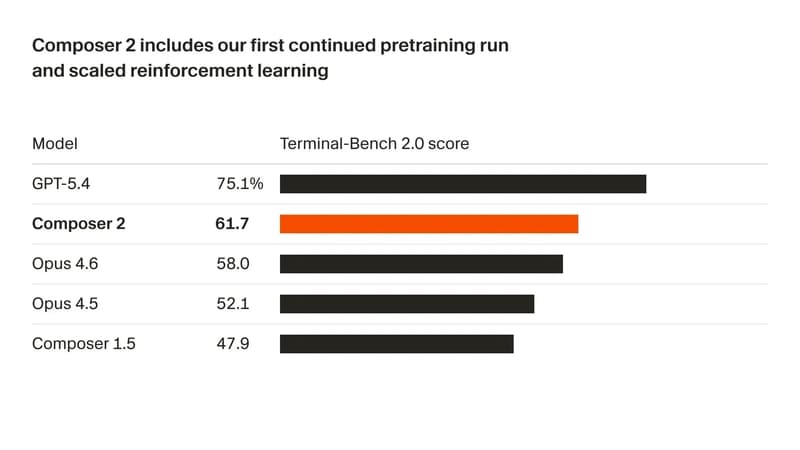
Composer 2: What is new and Compares with Claude Opus 4.6 & GPT-5.4
Dev.to
How UCP Breaks Your E-Commerce Tracking Stack: A Platform-by-Platform Analysis
Dev.to
AI Text Analyzer vs Asking Friends: Which Gives Better Perspective?
Dev.to
[D] Cathie wood claims ai productivity wave is starting, data shows 43% of ceos save 8+ hours weekly
Reddit r/MachineLearning

Microsoft hires top AI researchers from Allen Institute for AI for Suleyman's Superintelligence team
THE DECODER


