
Active Imitation Learning for Thermal- and Kernel-Aware LFM Inference on 3D S-NUCA Many-Cores
arXiv cs.LG / 4/15/2026
📰 NewsSignals & Early TrendsIdeas & Deep AnalysisModels & Research
Key Points
- The paper addresses the challenge of running large foundation model (LFM) inference efficiently on emerging 3D-stacked Static Non-Uniform Cache Architecture (3D S-NUCA) CPUs, which have better bandwidth/locality but face thermal and cache-latency issues.
- It proposes AILFM, an Active Imitation Learning scheduling framework that learns near-optimal thermal-aware thread migration and V/f scaling policies using oracle demonstrations.
- AILFM explicitly models both core-level performance heterogeneity and kernel-specific behaviors across diverse LFM kernels to keep operation within thermal safety constraints.
- The authors report extensive experimental results showing AILFM outperforms existing state-of-the-art baselines and generalizes across a range of LFM inference workloads.
Related Articles

Black Hat Asia
AI Business

The Complete Guide to Better Meeting Productivity with AI Note-Taking
Dev.to

5 Ways Real-Time AI Can Boost Your Sales Call Performance
Dev.to
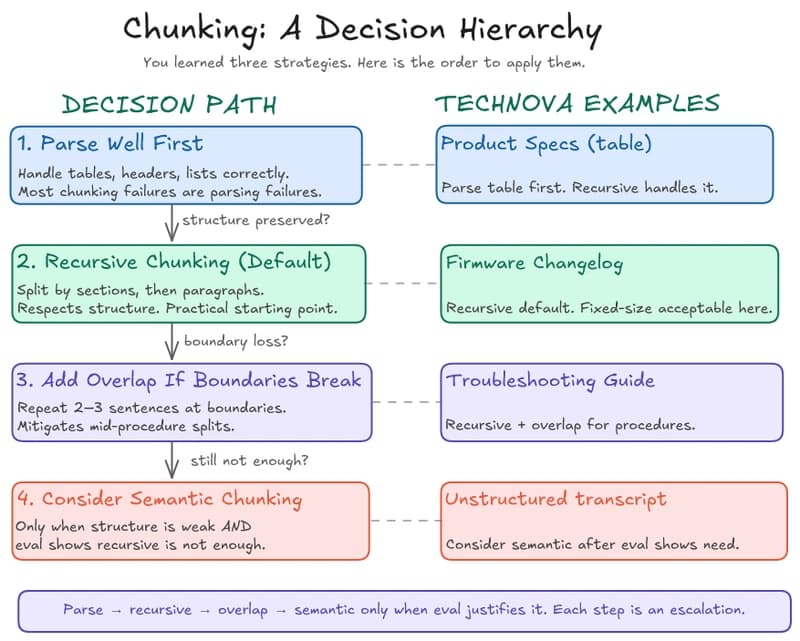
RAG in Practice — Part 4: Chunking, Retrieval, and the Decisions That Break RAG
Dev.to
Why dynamically routing multi-timescale advantages in PPO causes policy collapse (and a simple decoupled fix) [R]
Reddit r/MachineLearning


