
Vanishing L2 regularization for the softmax Multi Armed Bandit
arXiv stat.ML / 5/6/2026
💬 OpinionIdeas & Deep AnalysisModels & Research
Key Points
- The paper studies multi-armed bandit (MAB) algorithms that use a softmax mapping to choose policies, focusing on softmax policy gradients derived from subtracting an L2 regularization (quadratic) term from the mean reward.
- It addresses a gap in prior work: existing convexity-based analyses did not provide an appropriate framework to prove convergence when the regularization strength goes to zero.
- The authors provide new theoretical convergence results for the “vanishing L2 regularization” regime, establishing guarantees for how the method behaves as the regularization parameter vanishes.
- They also run empirical experiments on standard benchmarks to validate that, in practice, the near-zero L2 regularization setting can be numerically advantageous.
- Overall, the work links theory and practice by showing both provable convergence and improved numerical behavior for this specific softmax MAB/policy-gradient setup.
Related Articles

Top 10 Free AI Tools for Students in 2026: The Ultimate Study Guide
Dev.to
AI as Your Contingency Co-Pilot: Automating Wedding Day 'What-Ifs'
Dev.to
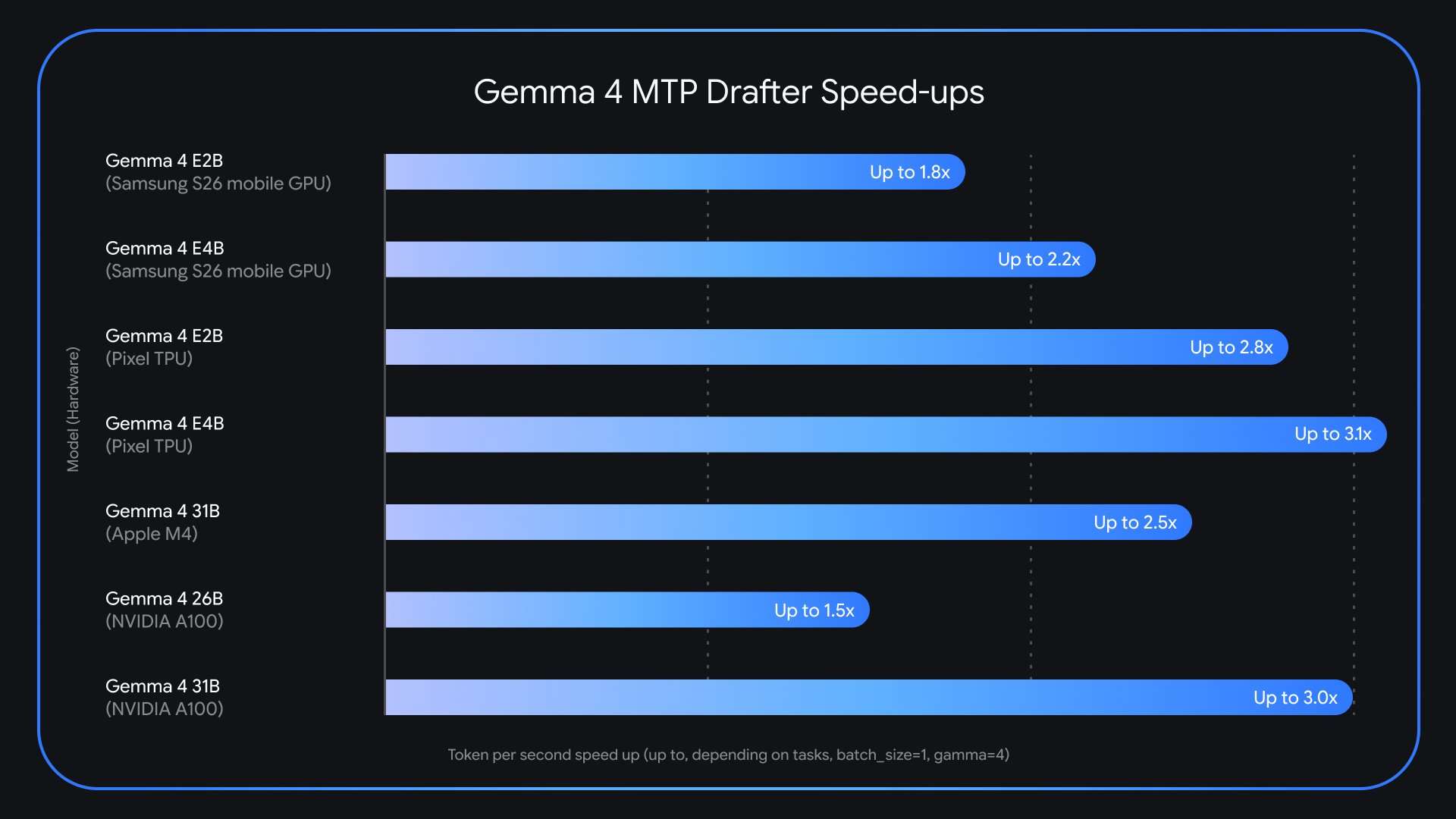
Google AI Releases Multi-Token Prediction (MTP) Drafters for Gemma 4: Delivering Up to 3x Faster Inference Without Quality Loss
MarkTechPost
When Claude Hallucinates in Court: The Latham & Watkins Incident and What It Means for Attorney Liability
MarkTechPost
Solidity LM surpasses Opus
Reddit r/LocalLLaMA


