
Mitigating Translationese Bias in Multilingual LLM-as-a-Judge via Disentangled Information Bottleneck
arXiv cs.CL / 3/12/2026
💬 OpinionIdeas & Deep AnalysisModels & Research
Key Points
- The paper identifies translationese bias in multilingual LLM evaluation, where LLMs prefer machine-translated text over human-authored references, especially in low-resource languages.
- It attributes this bias to spurious correlations with English latent manifold alignment and cross-lingual predictability.
- It proposes DIBJudge, a robust fine-tuning framework that learns a minimally sufficient, judgment-critical representation via variational information compression, with a dedicated bias branch to isolate spurious factors.
- It introduces a cross-covariance penalty to explicitly suppress statistical dependence between robust and bias representations to promote effective disentanglement.
- Experimental results on multilingual reward modeling benchmarks and a translationese bias suite show DIBJudge outperforms baselines and substantially mitigates translationese bias.
Related Articles
Day 10: 230 Sessions of Hustle and It Comes Down to One Person Reading a Document
Dev.to

5 Dangerous Lies Behind Viral AI Coding Demos That Break in Production
Dev.to
Two bots, one confused server: what Nimbus revealed about AI agent identity
Dev.to
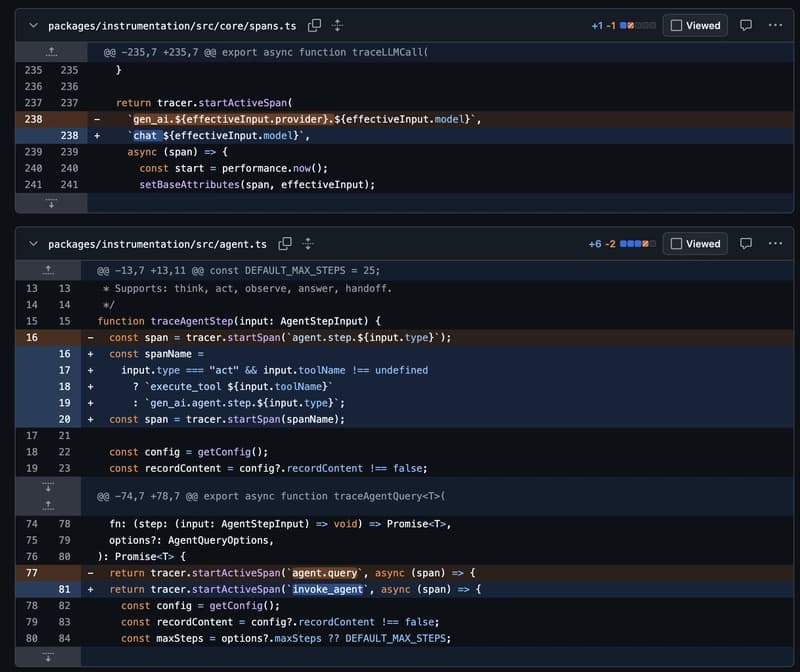
OpenTelemetry just standardized LLM tracing. Here's what it actually looks like in code.
Dev.to
PIXIU: A Large Language Model, Instruction Data and Evaluation Benchmark forFinance
Dev.to


