
Autonomous Vehicle Collision Avoidance With Racing Parameterized Deep Reinforcement Learning
arXiv cs.RO / 4/21/2026
📰 NewsIdeas & Deep AnalysisModels & Research
Key Points
- The paper proposes an out-of-distribution (OOD) collision-avoidance policy for autonomous vehicles using parameterized deep reinforcement learning (DRL) that aims to stay within nonlinear vehicle dynamics while remaining computationally efficient.
- It trains policies in simulation using a “race car overtaking” setup, leveraging a physics-informed, simulator-exploit-aware reward rather than explicit geometric trajectory guidance.
- Two DRL variants are evaluated—a default overtaking policy and a reversed-heading variant—and both are reported to outperform common MPC and artificial potential field (MPC-APF) baselines across multiple intersection collision scenarios.
- The approach is claimed to transfer “zero-shot” to proportionally scaled hardware, while using substantially fewer compute resources (31× fewer FLOPS) and lower inference latency (64× lower).
- In head-to-head collision tests, the reversed-heading policy improves performance by 30% over the default DRL racing policy and by 50% over the MPC-APF baseline, with both DRL methods achieving about 10% better-than-numerical-optimal-control evasion in side collisions.
💡 Insights using this article
This article is featured in our daily AI news digest — key takeaways and action items at a glance.
Related Articles

Rethinking Coding Education for the AI Era
Dev.to

We Shipped an MVP With Vibe-Coding. Here's What Nobody Tells You About the Aftermath
Dev.to
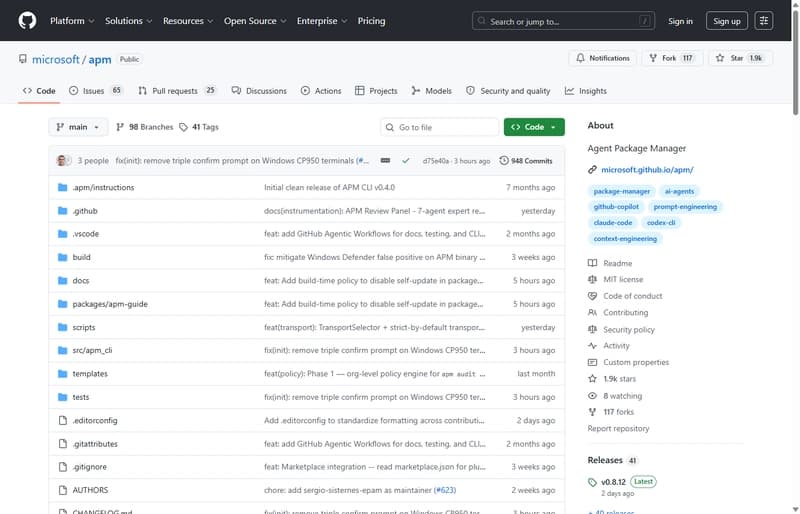
Agent Package Manager (APM): A DevOps Guide to Reproducible AI Agents
Dev.to
3 Things I Learned Benchmarking Claude, GPT-4o, and Gemini on Real Dev Work
Dev.to
Open Source Contributors Needed for Skillware & Rooms (AI/ML/Python)
Dev.to


