
Don't Stop the Multi-Party! On Generating Synthetic Written Multi-Party Conversations with Constraints
arXiv cs.CL / 3/30/2026
💬 OpinionIdeas & Deep AnalysisModels & Research
Key Points
- The paper addresses privacy risks and platform-specific biases in real Written Multi-Party Conversation (WMPC) datasets, proposing synthetic WMPC generation as an alternative.
- It explores generating synthetic WMPCs using instruction-tuned LLMs under deterministic constraints covering dialogue structure and participants’ stances.
- Two generation strategies are evaluated: having the LLM generate an entire WMPC in one shot versus generating the conversation turn-by-turn as individual parties given the history.
- The authors introduce an analytical evaluation framework that measures constraint compliance, content quality, and interaction complexity, using both human and LLM-as-a-judge assessments.
- Results show significant model-dependent differences, and turn-by-turn generation achieves better constraint adherence and greater linguistic variability, while both approaches can produce high-quality WMPCs.
Related Articles
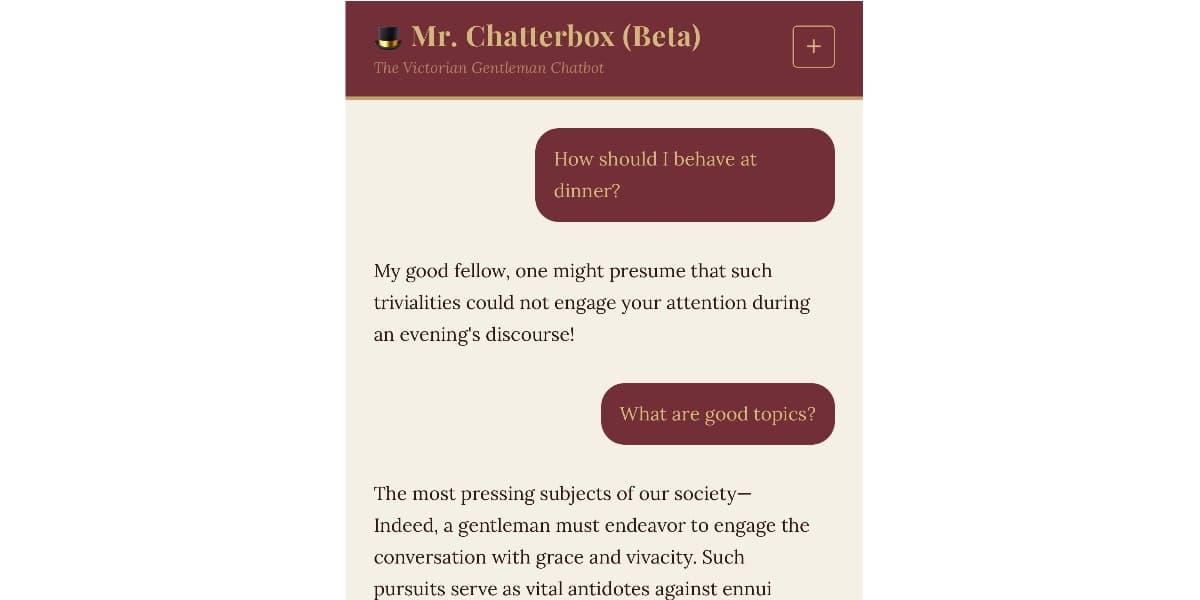
Mr. Chatterbox is a (weak) Victorian-era ethically trained model you can run on your own computer
Simon Willison's Blog
Beyond the Chatbot: Engineering Multi-Agent Ecosystems in 2026
Dev.to

I missed the "fun" part in software development
Dev.to

The Billion Dollar Tax on AI Agents
Dev.to

Hermes Agent: A Self-Improving AI Agent That Runs Anywhere
Dev.to


