
4DRaL: Bridging 4D Radar with LiDAR for Place Recognition using Knowledge Distillation
arXiv cs.CV / 3/30/2026
📰 NewsSignals & Early TrendsIdeas & Deep AnalysisModels & Research
Key Points
- The paper introduces 4DRaL, a knowledge-distillation framework for all-weather robotic place recognition that uses 4D millimeter-wave radar to mitigate camera/LiDAR sensitivity to adverse weather.
- It trains a 4D-radar-to-4D-radar (R2R) place recognition student model using a high-performance LiDAR-to-LiDAR (L2L) teacher model, addressing radar noise and sparsity via three KD modules.
- The framework includes a local image enhancement module for sparse radar point processing, a feature distribution distillation module to produce more discriminative student features, and a response distillation module to keep feature-space consistency.
- 4DRaL is also configurable to support 4D-radar-to-LiDAR (R2L) place recognition, not only R2R.
- Experiments report state-of-the-art performance for both R2R and R2L tasks under normal and adverse weather conditions, suggesting strong robustness for loop closure/global localization.
Related Articles

Black Hat Asia
AI Business
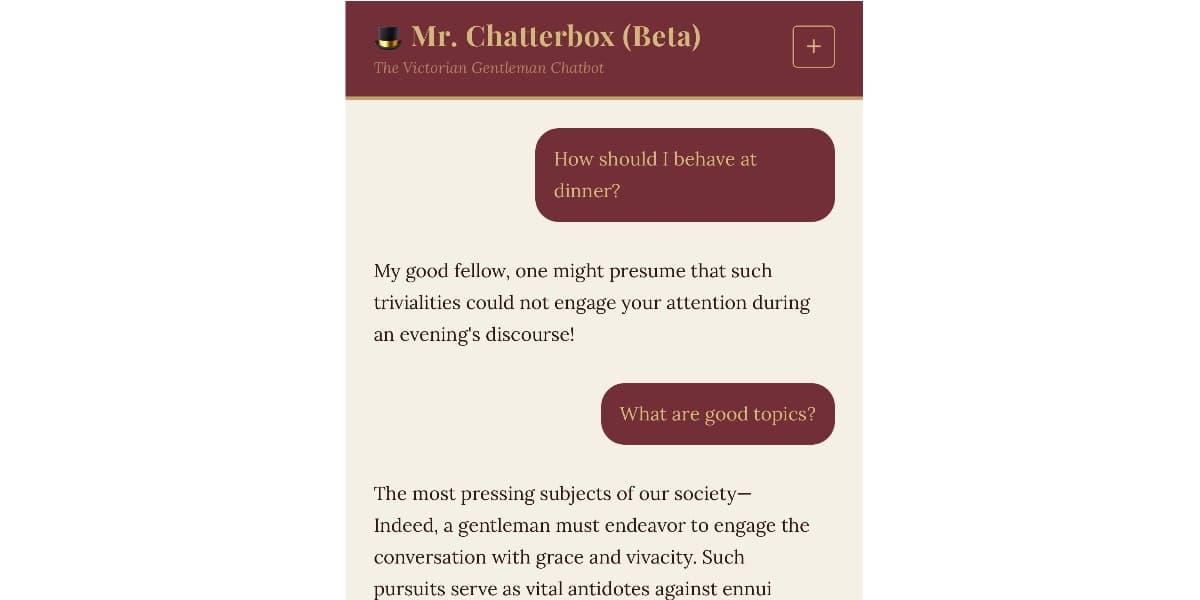
Mr. Chatterbox is a (weak) Victorian-era ethically trained model you can run on your own computer
Simon Willison's Blog
Beyond the Chatbot: Engineering Multi-Agent Ecosystems in 2026
Dev.to

I missed the "fun" part in software development
Dev.to

The Billion Dollar Tax on AI Agents
Dev.to


