
FNO$^{\angle \theta}$: Extended Fourier neural operator for learning state and optimal control of distributed parameter systems
arXiv cs.LG / 4/8/2026
💬 OpinionSignals & Early TrendsIdeas & Deep AnalysisModels & Research
Key Points
- The paper introduces an extended Fourier Neural Operator (FNO$^{\angle\theta}$) to learn both PDE states and linear-quadratic additive optimal controls for distributed-parameter systems.
- It leverages the Ehrenpreis–Palamodov fundamental principle to derive a complex-domain integral representation for states and optimal controls of linear constant-coefficient PDEs.
- The method modifies FNO layers by extending the inverse-Fourier frequency variable from the real line to the complex domain, aligning the network’s computation with the theoretical integral representation.
- Experiments on the nonlinear Burgers’ equation show order-of-magnitude reductions in training error and improved accuracy for non-periodic boundary-value prediction compared with standard FNO.
Related Articles

Black Hat Asia
AI Business
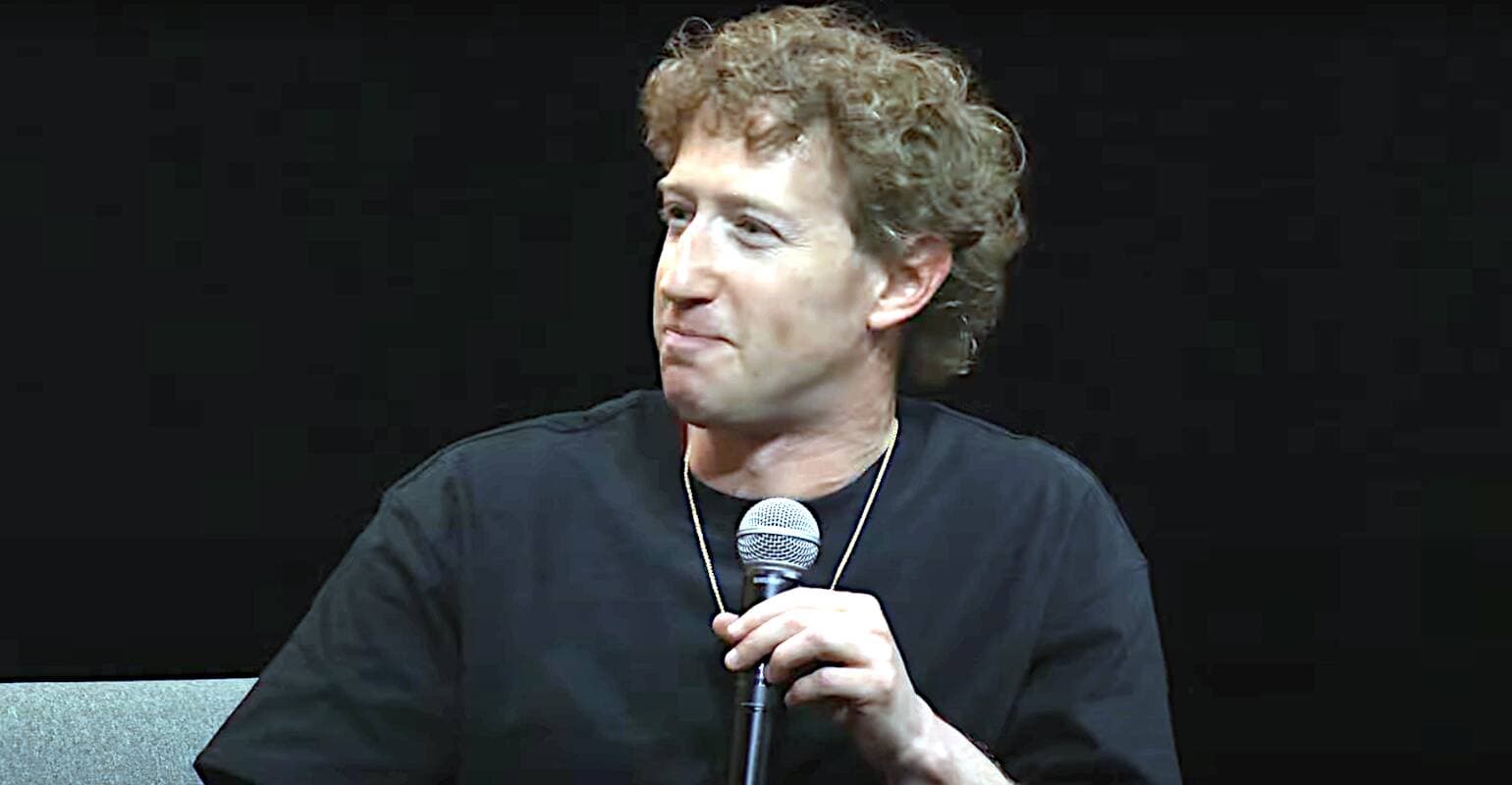
Meta's latest model is as open as Zuckerberg's private school
The Register

AI fuels global trade growth as China-US flows shift, McKinsey finds
SCMP Tech
Why multi-agent AI security is broken (and the identity patterns that actually work)
Dev.to
BANKING77-77: New best of 94.61% on the official test set (+0.13pp) over our previous tests 94.48%.
Reddit r/artificial


