
Geo$^\textbf{2}$: Geometry-Guided Cross-view Geo-Localization and Image Synthesis
arXiv cs.CV / 3/30/2026
📰 NewsSignals & Early TrendsIdeas & Deep AnalysisModels & Research
Key Points
- Geo$^2$ is proposed as a unified framework for cross-view geo-spatial learning that jointly addresses Cross-View Geo-Localization (CVGL) and Cross-View Image Synthesis (CVIS).
- The method leverages 3D geometric priors from Geometric Foundation Models (e.g., VGGT), but introduces GeoMap to handle the large ground–aerial viewpoint gap by mapping both views into a shared 3D-aware latent space.
- GeoFlow is presented as a flow-matching generative model conditioned on geometry-aware latent embeddings to enable bidirectional image synthesis between ground and aerial views.
- A consistency loss is added to enforce latent alignment across the two synthesis directions, improving bidirectional coherence.
- Experiments on CVUSA, CVACT, and VIGOR reportedly achieve state-of-the-art results for both localization and synthesis, suggesting 3D priors can significantly improve cross-view geo tasks.
Related Articles

Black Hat Asia
AI Business
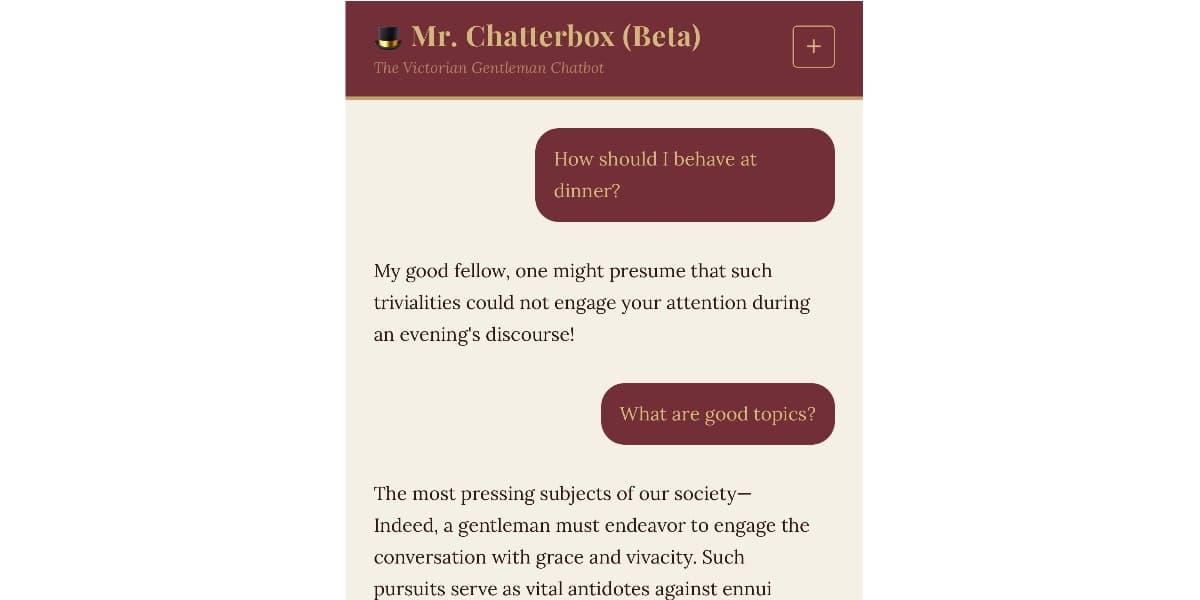
Mr. Chatterbox is a (weak) Victorian-era ethically trained model you can run on your own computer
Simon Willison's Blog
Beyond the Chatbot: Engineering Multi-Agent Ecosystems in 2026
Dev.to

I missed the "fun" part in software development
Dev.to

The Billion Dollar Tax on AI Agents
Dev.to


