
End-to-end Feature Alignment: A Simple CNN with Intrinsic Class Attribution
arXiv cs.CV / 3/30/2026
💬 OpinionIdeas & Deep AnalysisModels & Research
Key Points
- The paper introduces Feature-Align CNN (FA-CNN), a prototype convolutional neural network designed for end-to-end feature alignment that yields intrinsic class attribution in its feature maps.
- It argues that typical unordered operations (e.g., Linear and Conv2D) can shuffle semantic concepts, and proposes order-preserving mechanisms—dampened skip connections and a global average pooling classifier head—to maintain alignment from input pixels to class logits.
- The authors provide theoretical results showing the FA-CNN penultimate feature maps are identical to Grad-CAM saliency maps, strengthening the model’s interpretability link to established attribution methods.
- They also show analytically that features “morph” gradually across network depth toward penultimate class activations, describing how representations evolve layer by layer.
- Experiments report strong benchmark image classification performance and improved interpretability versus Grad-CAM and permutation-based baselines on a percent-pixels-removed evaluation task.
Related Articles
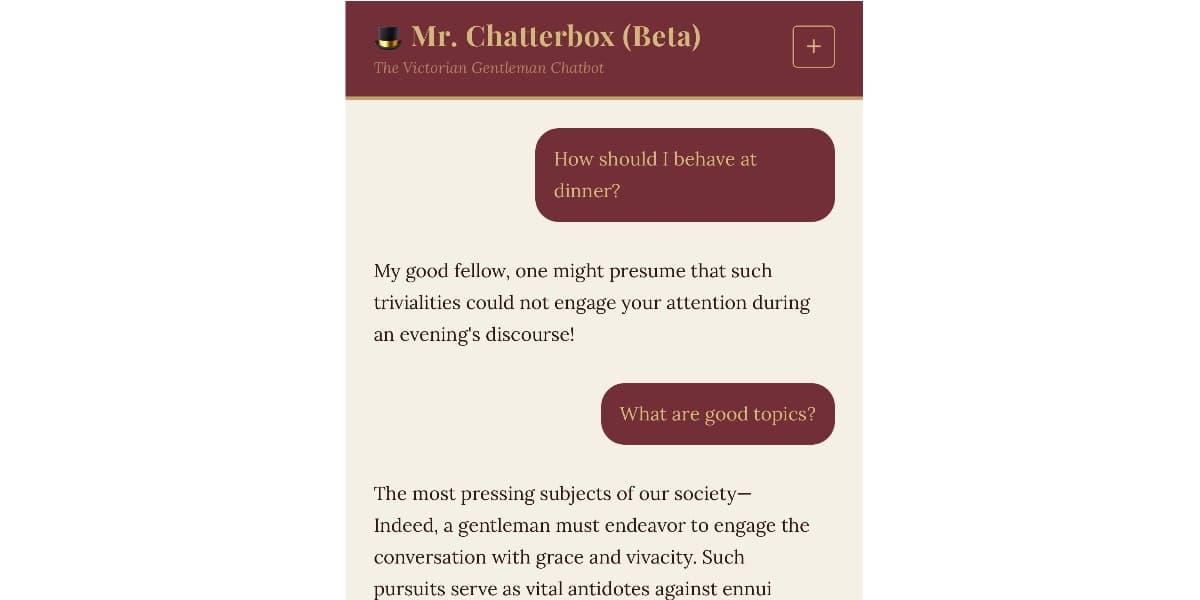
Mr. Chatterbox is a (weak) Victorian-era ethically trained model you can run on your own computer
Simon Willison's Blog
Beyond the Chatbot: Engineering Multi-Agent Ecosystems in 2026
Dev.to

I missed the "fun" part in software development
Dev.to

The Billion Dollar Tax on AI Agents
Dev.to

Hermes Agent: A Self-Improving AI Agent That Runs Anywhere
Dev.to


