
Hierarchical Pre-Training of Vision Encoders with Large Language Models
arXiv cs.AI / 4/2/2026
💬 OpinionSignals & Early TrendsIdeas & Deep AnalysisModels & Research
Key Points
- The paper introduces HIVE (Hierarchical Pre-Training of Vision Encoders), a framework that improves vision-language alignment by adding hierarchical cross-attention between a vision encoder and an LLM rather than treating them as independent modules.
- HIVE fuses structured visual features across multiple layers, which the authors argue enhances representation learning and improves gradient flow compared with approaches that flatten image embeddings.
- A three-stage training strategy is proposed to progressively align the vision encoder with the LLM, aiming for stable optimization and more effective multimodal fusion.
- Experiments on image classification and multiple vision-language benchmarks (including MME, GQA, OK-VQA, and ScienceQA) show HIVE outperforming self-attention-based methods.
- The results suggest hierarchical visual feature integration can yield more efficient and expressive vision-language models, motivating future work on structured cross-modal architectures.
Related Articles

Black Hat Asia
AI Business
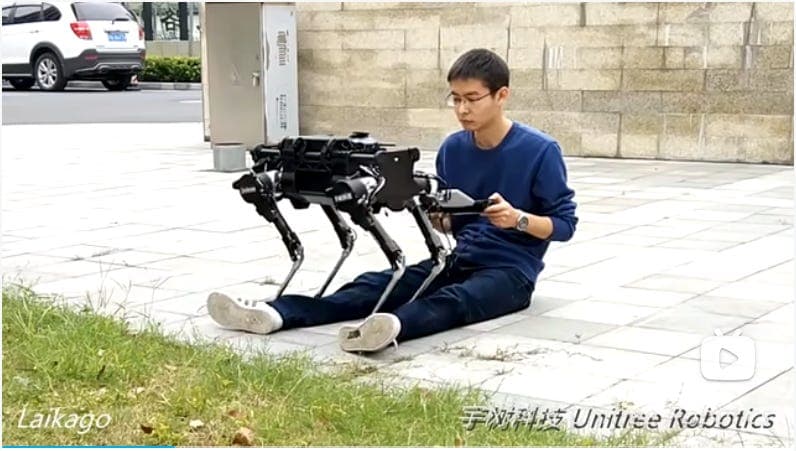
Unitree's IPO
ChinaTalk

Did you know your GIGABYTE laptop has a built-in AI coding assistant? Meet GiMATE Coder 🤖
Dev.to

Benchmarking Batch Deep Reinforcement Learning Algorithms
Dev.to
A bug in Bun may have been the root cause of the Claude Code source code leak.
Reddit r/LocalLLaMA


