
Building AI Agents from Scratch (Part 1): Core Architecture and Underlying Principles Explained
Dev.to / 6/12/2026
💬 OpinionDeveloper Stack & InfrastructureIdeas & Deep AnalysisTools & Practical Usage
Key Points
- The article defines an AI agent as a system that perceives its environment, reasons and plans autonomously, and uses external tools to take actions toward a specific goal.
- It contrasts autonomous agents with traditional chatbots by highlighting that chatbots typically rely on single-pass, reactive dialogue, while agents iteratively run an “agent loop” and can recover from failures.
- The piece explains a commonly used architecture formula: Agent = LLM + Memory + Planning + Tool Use, where the LLM provides reasoning, memory stores context, planning breaks down goals, and tool use performs real-world actions.
- It illustrates why agent-style execution matters for multi-step, dependent tasks (e.g., searching flights, checking loyalty points, and booking), which are difficult for standard chatbots to handle reliably.
Continue reading this article on the original site.
Read original →Related Articles

Black Hat USA
AI Business

From AI to Zero Trust: Inside Indian Retail’s 2026 Tech Priorities –
Dev.to

I Started Reselling AI Access Last Year — Here's the Side Hustle Nobody's Talking About
Dev.to
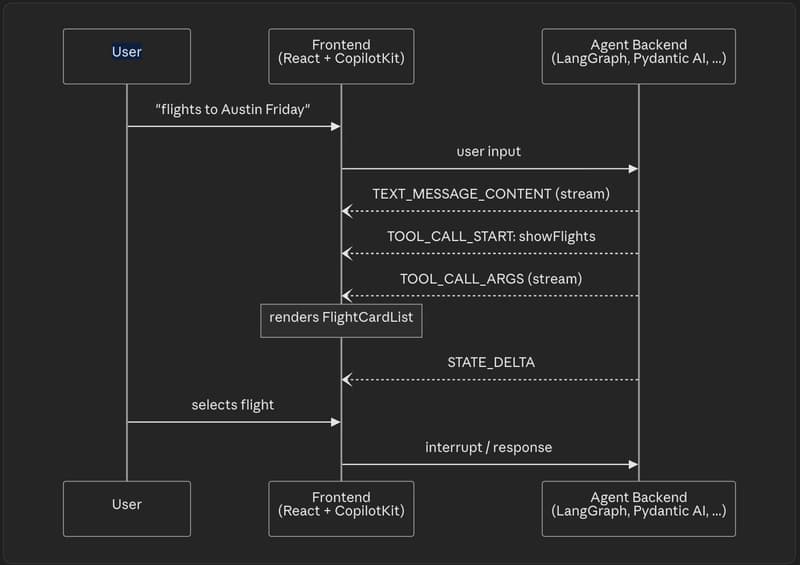
Day 2: Generative UI Gen 1 — Static Components with AG-UI
Dev.to
What if we succeed in creating ASI, but it does absolutely nothing with us
Reddit r/artificial


